Lost in the Parking Garage

I wish I could say this was the first time I ever did this: riding in a golf cart with a nice young man named Jeff as we try to find my parked car. First time in this particular garage, however.

“What kind of car is it?” Jeff asks.

“A Volkswagen Passat wagon,” I answer. “Dark brown but everyone thinks it’s black.”

“They’re nice cars,” he says. “My mom used to have one. Not the wagon, though, the sedan.”

“Yes,” I say. “We’ve had quite a few of both. But they’re not going to make them anymore.”

“I guess you’re right,” he says. “Are you sure you parked on the fourth floor?”

“Pretty sure. And when I pushed the lock button on the clicker thing here, I could hear my car beep.”

So we ride up and down the aisles pushing the clicker and listening for the beep. At one point a colleague of Jeff’s stops to lend advice.

“No,” he says, “don’t push the lock button. Push the panic button. Hold the thing up high and hold down the panic button.”

We can hear my car’s distress…somewhere. And suddenly, many car alarms go into panic mode together. Pandemonium reigns throughout the garage for a few moments.

Jeff decides the car might be one floor below or one floor above, so we try those places, and finally on the FIFTH floor, we see my car. I’d already told him about the stickers on the back window that read “Yes, I voted Obama” and the new one, “Proud Democrat.”

“I just put that one up this morning,” I say. “I thought maybe people should know I voted for Obama and I’m glad I did.”

“My Mom’s a Democratic legislator,” he says and he tells me which state.

“Well, tell her hello from me and say you rescued a ditsy old lady Democrat today in the parking garage.”

“I will,” he says. “Glad I could help.”

By this time the free parking ticket is no longer valid. I have to pay $3 to get out of the place.


Vanity Unfair

eyeglasses“Not to be vain” I said to my daughter, “but have I always had circles under my eyes?”

“We all have circles under our eyes,” she said. I wasn’t sure whether she meant “all” as in everyone in our family or as in all of humankind. No matter.

Since my cataract surgery three months ago I have been getting used to what I refer to as my new eyes — actually, just new lens implants. Also to my face without glasses. The eye doctor urged me to try not to use my reading glasses but I still need them for newsprint and the smart phone. The daughter gave me a cord for hanging them around my neck, and I gave her grief for thinking I needed such an “old lady” accessory. “But this one is leather,” she said. “It’s not one with pearls or little beads.”

In truth, it’s quite handy, plus there’s no reason to bother with jewelry when you’ve got a pair of glasses hanging from your neck. They go with everything.

I find it especially useful in the supermarket where, without glasses, I can get my hand on our preferred brand of coffee. But then I need the glasses to be sure it’s whole beans, not ground, and regular tasting, not — heaven forbid — one of those awful flavored ones. So as I make my way up and down the market’s aisles, the glasses go up and down as well. When they go down I think, “I’ll bet people think I’m too vain to wear my glasses.” That’s what I used to think about other people. So far I’ve resisted the urge to periodically announce to anyone within earshot that this activity is born of necessity, not vanity.

However, when I mentioned to a friend my newly discovered under-eye circles, she sent this observation: “The circle under the eye camouflage has been one of my main reasons for wearing glasses for years. Forget the vision; let’s get to the important things!”

“Maybe,” I wrote back, “that’s why people wear those tinted glasses. Also sunglasses inside.”

Never too old for vanity.

Mizzou Pride?

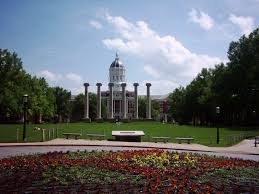
UM Jesse HallAm I proud of my alma mater for acceding to the demands of campus activists that attention be paid to repeated racist actions? Or am I saddened by the realization that in 2015 this was even an issue? Or, even more distressing, does the cynic in me acknowledge that in the end it was money – or the anticipated loss of it – that brought an end to the demonstrations at the University of Missouri? Once the football players and their coaches threatened to boycott their program, the potential loss of millions in forfeit fees and television revenues was enough to get the president and the chancellor both to step down. And now, it is hoped, attention is being paid.

Until hearing about the Concerned Student 1950 nomenclature that the activists adopted, I had no idea that I entered the university just six years after the first black students were admitted to Mizzou. Six years! And was I aware of their presence on campus and what a lonely existence they no doubt endured? No, ensconced as I was in my white sorority girl bubble, I had no comprehension of their situation. Or perhaps, as was the case of Gus T. Ridgel, one of the first of those students, there were so few places where they could be seen. In a New York Times article, Ridgel, now 89, recalls entering a café with three white students. “The man looked up from the counter and said, ‘I can serve you three but I can’t serve him.’” Ridgel’s companions retorted, “If you can’t serve the four of us, you can’t serve any of us.” And they walked out.

There were good people even then. Ridgel said classmates made a point of sitting with him for meals and eventually asked to study with him. When one professor gave him his two lowest grades – the two Bs of his academic career there – his study mates thought it was wrong. Things were worse at some of the other academic institutions he attended. As a Ford Foundation fellow at Duke University, The Times writes, “he was barred from going through the cafeteria line and even from dining with other Ford fellows until a partition was erected shielding them from other diners. Nor could he retrieve books from library stacks, something other students routinely did.”

UM sealI cannot begin to imagine having to deal with those sorts of injustices. The closest I came was when a journalism professor refused to allow me to enroll in his class “because it’s a waste of my time to teach girls since they just end up getting married.” Whatever words I used to change his mind have been lost to time but I eventually wore him down, entered his class and did well. But then I got married, and he was so angry I almost didn’t graduate.

A few years later in Sacramento Ed and I went to a favorite restaurant of ours with African- American friends. For the first time, we were seated in back by the door to the kitchen and ignored for what seemed like an inordinately long time. As Ed’s temper rose and he beckoned for the maitre de, our friend patted Ed’s arm. “Don’t worry about it,” he said. We were eventually served, though I felt as though many of the other customers spent a lot of time staring at our table. Ed and I never went to that restaurant again.

Many years later in New Jersey I learned from a colleague about the problems that come with “driving while black.” More times than he could count, despite being dressed in suit and tie and driving a nice car, my friend would be stopped by the police and asked to produce license and registration. Has that ever happened to me? Only when I’ve done something stupid like rolling through a stop sign.

The Times writes that unlike black students at Missouri today, Mr. Ridgel felt largely powerless to do much about his situation. “They have available to them means to react to an unfair situation that obviously weren’t available to me in 1950,” Ridgel said. “That [those means] had to be used is unfortunate.” I agree.

UM bumper sticker

Paper Underwear

“Would you wear paper underwear?” That was the slogan on a van I saw this week in my neighborhood. It belonged to a diaper service, a company that handles cloth diapers, delivering clean ones and picking up soiled ones to be taken back and laundered. (I’m giving that explanation in case there are young people who think babies have worn disposable diapers from time immemorial.)

When our first child was born, someone presented us with a gift of free diaper service for a certain period of time. We continued it for a while after the gift time expired, but then we purchased a washer and dryer so that the diaper service money went toward paying for the new appliances. Every baby we knew wore cloth diapers in those days.

But one day something new arrived in the mail: a free sample of Pampers® disposable diapers. Sacramento, California apparently was a test area for these new things. My friends and I thought they were nice and continued to purchase them once the samples were gone. But we used them only for travel or when taking the baby with us to a friend’s house for the evening. It never occurred to us that a time would come when babies would spend their entire infancy and early childhood in disposable diapers. Or that the things would become a major problem for sewage systems and municipal landfills.

Today, 95 percent of babies in the U.S. wear disposable diapers, according to an article in The Atlantic about Marion Donovan, the woman credited with inventing – and manufacturing – the first disposable diaper. The reason she had to manufacture them herself is because none of the men heading the large companies she approached could see a need for such a thing.

Today, the Union of Concerned Scientists (UCS) estimates Americans throw away 18 billion disposable diapers a year. A timeline in Mother Jones gives 2500 as the year when today’s disposable diapers will finally finish biodegrading.

“Green America,” an online publication of greenamereica.org, outlines the pluses and minuses of cloth versus disposable and shares conclusions of UCS: “After analyzing the results in their latest edition of “The Consumers’ Guide to Effective Environmental Choices, UCS encourages people not to ‘waste a lot of time or energy trying to decide which type of diapers to use based on environmental considerations,’ since the differences aren’t particularly dramatic. If you live in an area with landfill issues, choose cloth, and if your community suffers water shortages, choose disposable, they say.”

Well, what to do in Los Angeles? We have both landfill issues and water shortages. It’s enough to make a person’s mind spin. Fortunately, I’m past the point in life where such decisions must be made. The kinds of decisions I must make are concentrated at the other extreme of life. Which is why I appreciated a slogan on another van, this one from a retirement home delivering a resident to the doctor’s office. It read “Caring never gets old.”

Nice, huh? But, no, I wouldn’t want paper underwear.

Bring on the Witches!

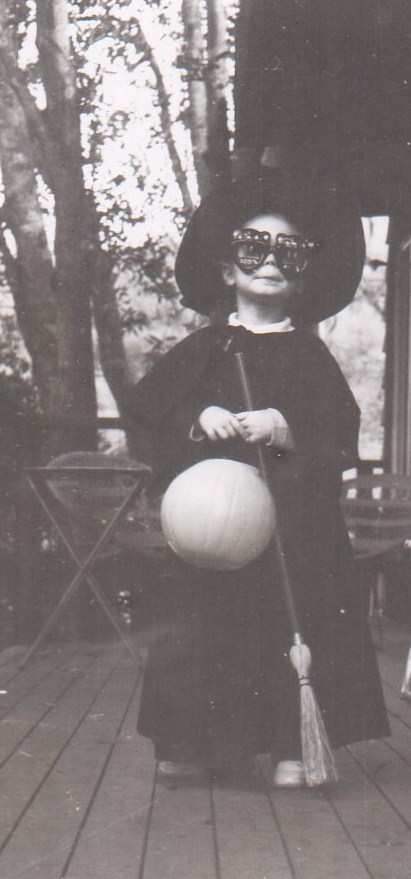
Witch costumeI’m sure there will be at least one witch among the trick-or-treaters at our door on Saturday night, something for which I will be grateful. It will mean that there will be one costume I’ll be able to identify among the movie, TV, video game and other current characters reaching their hands into the candy tray. “Great costumes, guys,” I say, not wanting to display my senior citizen ignorance by asking what their costumes represent and worse, who or what on earth that is.

What brought witches to mind as Halloween approaches is a new book by Stacy Schiff, The Witches: Salem, 1692, reviewed in The Atlantic by Adam Goodheart and highlighted by Schiff herself in a Sunday New York Times article last week. Headlined “First, Kill the Witches. Then, Celebrate Them,” it traced the trajectory Salem, Massachusetts experienced as it moved from a prosperous Massachusetts Bay Colony settlement to one in which a fit of hysteria brought about accusations of witchcraft and trials that resulted in 20 women and men being executed (hanged, according to Goodheart, none burned at the stake as popular mythology has it). “Then,” as Goodheart writes, “suddenly, as 1692 turned into 1693, the executions stopped, the accusers fell silent, the jails emptied…For the next 300 years and more, people were left wondering exactly what had happened.”

In those intervening years, Schiff writes in The Times, “Salem had many claims to fame. It preferred not to count the witchcraft delusions among them; no one cared to record even where the town had hanged 19 innocents. It addressed the unpleasantness the New England way: silently.” [Nineteen people were hanged; one man died pressed by heavy stones in a failed attempt to elicit a confession.] In 1952, Schiff writes, Arthur Miller visited Salem researching for his play “The Crucible” and found the subject was taboo; no one would talk to him about it.

Schiff credits “a different kind of enchantment in the form of the ABC sitcom ‘Bewitched’ bewitchedto helping Salem reconnect with its past and “transmit its secret shame into its saving grace. In 1982 it introduced ‘Haunted Happenings,’ later extending it into a four-week festival.” The Boston Globe has written “Salem owns Halloween like the North Pole owns Christmas.” In Salem’s case the ownership is considerably more commercially successful.IST-IS2176RM-00000028-001

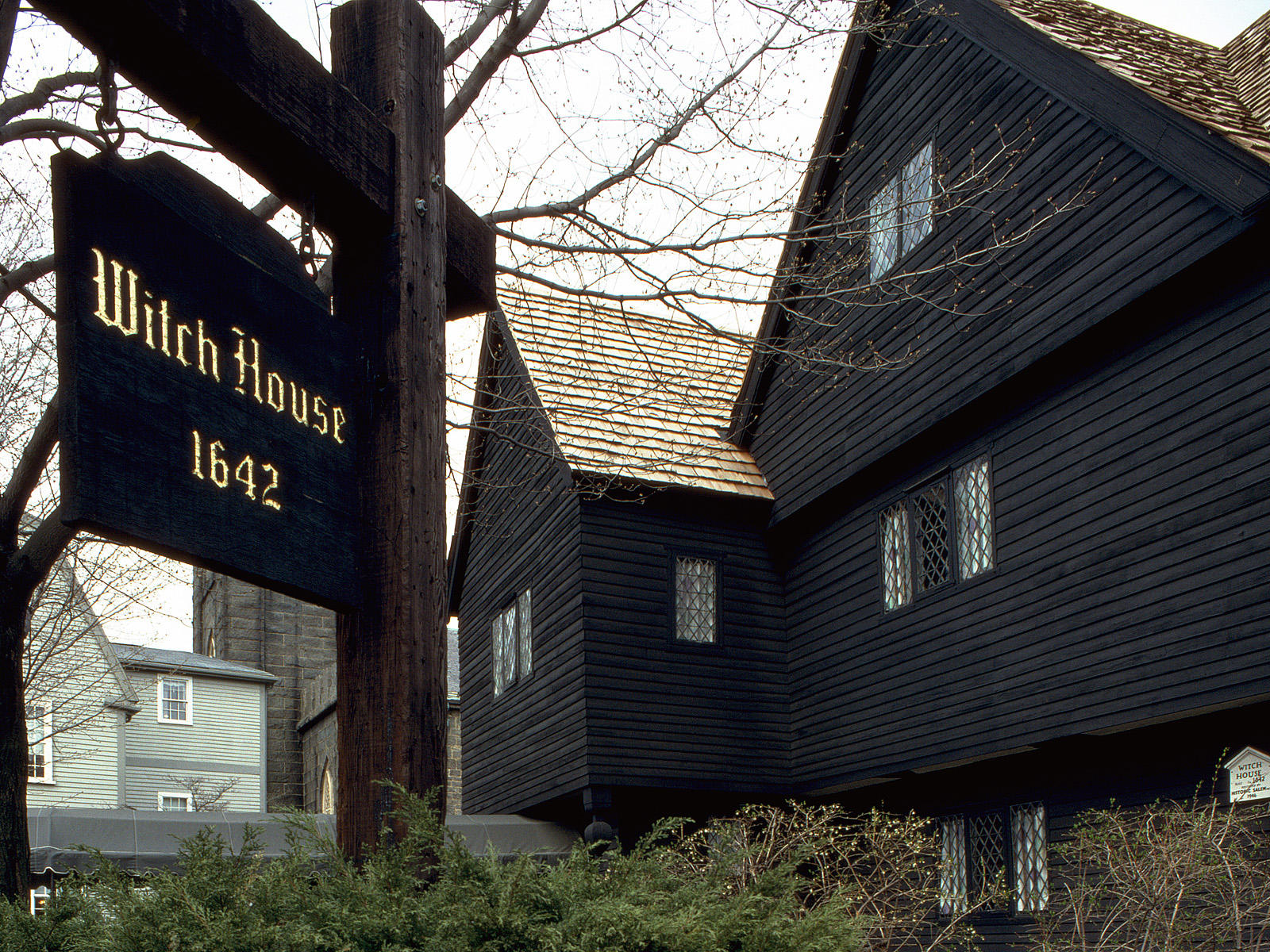
Ed and I took our two young daughters to Salem during a trip through New England, visiting the Witch House and other attractions and buying them tiny witches for their charm bracelets. Some years later, when Ed’s sister in New Mexico said she sure would like to see New England sometime, we planned a whirlwind trip from our home in New Jersey, driving through New York and then into the six states of New England over 10 days. A stop in Salem was on that agenda was well.

Cowgirl costumeHaving two daughters four years apart in age gave our Halloween costumes a chance for double duty – and me a respite from having to make two each time. But my ploy was undermined the year the younger one declared she had no interest in being a colonial lady on Halloween. What did she want to be? “I want to be a cowgirl,” she said.

Well, there’s another costume I could identify if it shows up at our door.

Rhythms of Senegal

Doudou N’diaye Rose, a world renowned drummer from Senegal died recently, and reading Doudou Rose 2about him in The New York Times took me back to a visit to that country that my cousin Dorothy Woodson and I made in 2004. As curator at the time of African collections in the Yale University library, Dorothy was on an acquisitions trip; I was just tagging along.

All three of the West African countries we visited on that trip – Senegal, Mali and Burkina Faso — have vibrant and thriving performance traditions but I’m afraid we did not take advantage of their offerings. Hot humid days traveling from one non-governmental agency to another and one bookstore to another, frequently needing to return to an ATM for the cash that all enterprises required, and lugging stacks of books and periodicals to DHL for shipping back to New Haven left us in no condition for an evening on the town. Besides, as middle-aged women traveling alone we hesitated to venture very far unaccompanied into dark, dusty streets. And it was after all a business trip. So we’d drink some wine, eat some dinner and rest up for the next day.

And so we never experienced an evening of Senegalese drumming such as that performed by Mr. Rose, named a “living human treasure” by the United Nations Educational. Scientific and Cultural Organization. The Times called him “the country’s chief drum major, a kind of Pied Piper of Senegalese drumming culture and literally the father of its continuing prominence.” In addition to fostering the tradition at home, he also performed around the world, appearing “onstage or on the bill with Miles Davis, Dizzy Gilespie, the Rolling Stones and Peter Gabriel.”

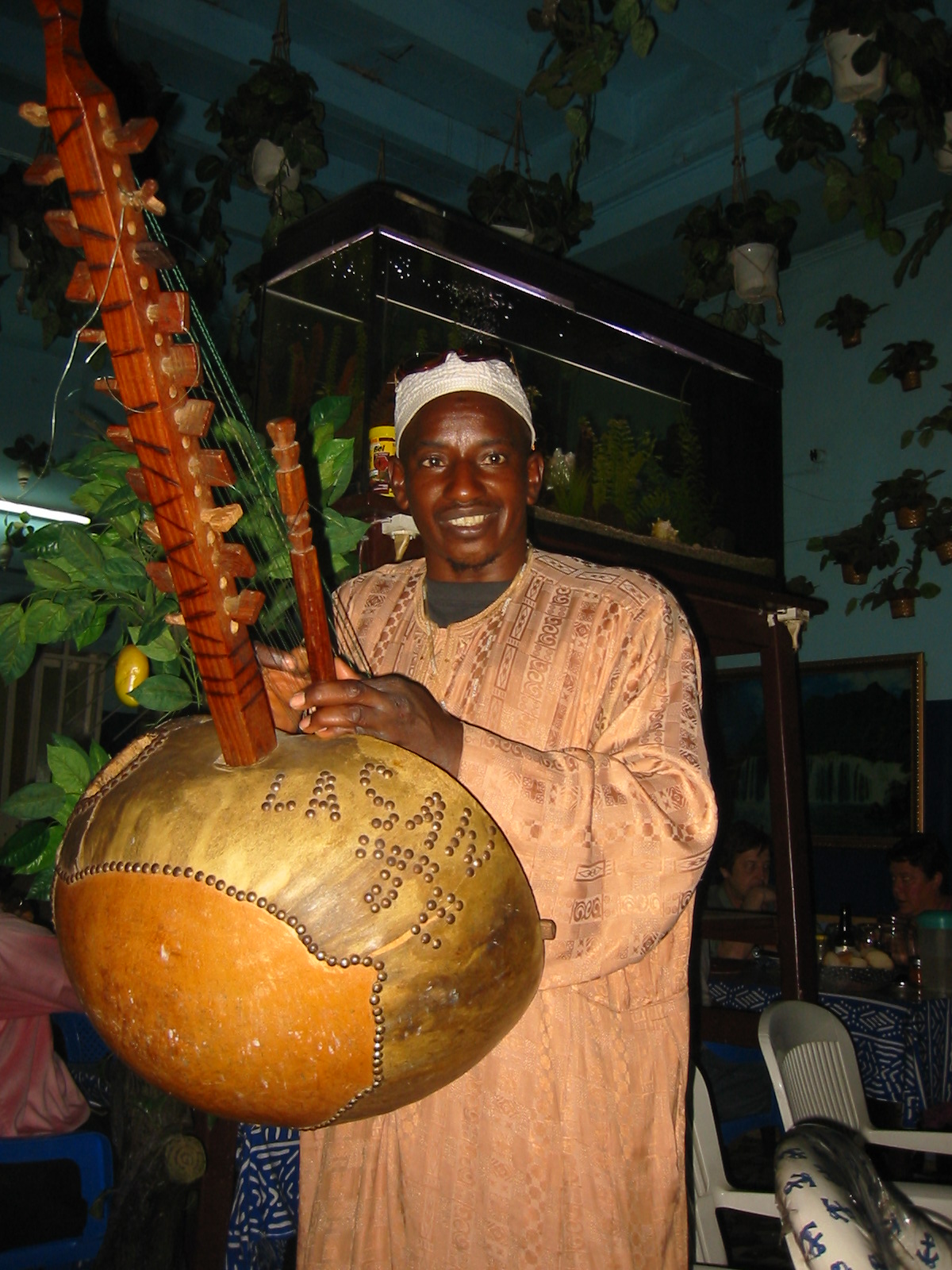
The closest we came to live musical entertainment in Senegal was the kora, a twenty-four 123-2350_IMGstringed instrument made from a large casaba rind, that was played by a cheerful man in a restaurant we frequented. Our repeated visits to the restaurant taught us that the preferred method for tipping this musician was to drop coins into the hole in the back of the instrument.

The full extent of our experiences in Senegal can be seen in my book, African Tales, on this website.

Photos: lemonde.fr;p.nieder

Remembering September 11

NYC046I overheard two young mothers asking, “Is your child’s school requiring students to wear red, white and blue tomorrow?” I thought, as I walked by, how interesting that here in Southern California there are observations such as that for an event that happened, for these children, long ago and, actually, pretty far away. On the other side of the country in fact. I mused about how when one has no school-age children or grandchildren a person can miss out on stuff like that.

As someone who was on that side of the country at the time, my memories rushed back. I was living in New Jersey. My California daughter was headed for a business trip to Miami, and we spoke on the phone the night before she left. Mid-conversation she suddenly gasped. “What’s the matter?” I asked. “We’re having an earthquake,” she said. “Hang up right now and call me back,” I said. In a short time the phone rang and she was back. “It was just about a four-point-something on the Richter Scale” she said, “nothing to worry about.” “Okay,” I said. “Get some sleep. And have a good trip.”

At a little after 9 the morning after, the phone rang and that same wtcdaughter’s voice said, “Your disaster seems to be worse than mine.” I asked what she was talking about. “Have you turned off the radio?” she asked. I had. NPR broadcasts in our home for a certain amount of time before we start our day: reading the newspapers, feeding the dog, eating breakfast, showering, going for a morning walk. Our daughter brought us up to date: a plane apparently had crashed into one of the World Trade Center towers. “What can you see?”she asked.
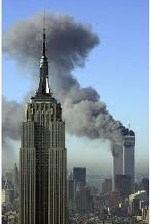
I rushed down to the kitchen where a small television set provided breaking news for two former journalists. Concurrently, I peered out the window. Located in Montclair, New Jersey, 14 miles from New York City, our house pointed toward midtown Manhattan and the Empire State Building. The two scenes were surreal: out the window, blue sky, sun glinting off the Empire State Building; on the TV screen, billowing smoke pouring from a building we had visited many times, escorting out-of-town visitors and through which Ed had walked daily on his way to work at AT&T. We moved our gaze between the two scenes in disbelief. Before long, the third plane crashed into the Pentagon and we soon learned of the aborted flight of a plane headed for the White House.

Quickly our concern shifted to our New York daughter living at the time in Brooklyn and to her fiance working in mid-town Manhattan. Cell phones were useless. All that remained was waiting for word. We learned later that our daughter had stood at the edge of the Brooklyn waterfront staring across at the horror playing out in the city, while her fiance had struggled with untold thousands battling his way across bridges and out of the city.

The California daughter and fellow staff members were trapped in Miami and New York unable to return to Los Angeles for two days. The group in New York rented a car and headed back across country. Our daughter and those with her in Miami got on the first plane to leave the city. New Jersey, like all the Greater New York Region, and indeed all of the nation remained in shock and disbelief that anything so horrendous could happen to our country.

In the days that followed, we attended a memorial service for a young neighbor who worked at Cantor Fitzgerald and various prayer services throughout our community and others nearby. And eventually we took ourselves to the World Center site itself where we walked somberly with others around the devastation’s perimeter, people talking in hushed tones in many languages, asking, “Why would anyone do this to us?” Later a retired military friend took us to Arlington National Cemetery for a vantage point from which to view the Pentagon’s attack location.

This evening The Rachel Maddow Show ran a special program on MSNBC in which NBC’s live action reporting from the first inkling of the disaster and beyond was broadcast. It is something that should be seen by everyone who was alive then and living nearby as well as those who lived far away or had not yet been born. It will explain why the flags are flying at half-mast today and why their children are asked to dress in red, white and blue.

Photos: NYC from Montclair, New Jersey, 9/11/01; telegraph.co.uk

Cataract & Ruin (Ouch)

eye4Another step on the road to decrepitude. When I told my former college roommate that I was having cataract surgery, she said “God, we really are old, aren’t we?”

Yes, we are. But aren’t we lucky to be old at this time? Back in the day, this kind of procedure required a hospital stay, eye patches, protective goggles, and a list of strict restrictions like those against lifting and bending. The restrictions are still there, but offered more in the way of suggestions to resume normal activities but avoid anything strenuous. Don’t bend over the day of surgery (impossible since I was mostly sleeping off the anesthesia) or drive for 24 hours (same situation). But I did drive myself to the doctor’s office the next day and everywhere else until a week later when the entire procedure was repeated on the second eye.

Cataract surgery involves removal of the eye’s lens which has become cloudy over time and replacing it with an artificial lens. It is usually a same-day procedure performed in a physician’s office or medical facility. Recovery is most often swift and easy.

(But why do you suppose discussion of medical procedures releases the worst punning instincts in me? A while back there was the post about Paul Bunion and now this heading, which only makes sense if you keep the “t” silent.)

My eyes are getting used to their new lenses and even with new over-the-counter “readers” from the drug store, I was thrilled to be able to read an entire New Yorker article the other night. The next big break-through will be eye makeup (one more week!). The blazing California sun is a challenge but the UV protection sunglasses from the doctor help and who cares if they make me roy orbisonlook like Roy Orbison.

Another reason why we’re lucky is Medicare. Not only was the surgery covered but I was informed that as a Medicare patient who’d undergone cataract surgery, I am entitled to one free prescription “reader” glasses. So something a little more grownup is on the way, though the sparkly pink ones from Walgreen’s are fun.

And don’t think of trying to make me feel guilty about Medicare. I believe we should have Medicare for all in this country. Our distinction as the only so-called advanced country in the world whose people do not have medical care as a right is shameful. Obamacare is a start but it should be universal. And Medicare should be able to bargain with the drug companies as the Veterans Administration does.

A man from Sweden was visiting us a few years ago. “Guess what,” he said. “I got hearing aids.” “Good for you,” I replied. “Ed and I getting close to needing them.” “Guess how long I had to wait for them,” he said. “How long?” “A year.” “And when you got them,” I asked, “how much did they cost?” “Oh,” he said, “nothing.”

Humpf! A year’s wait seems like a piece of cake to me. Not unlike cataract surgery.

Photo: Roy Orbison

Godspeed to Jimmy Carter

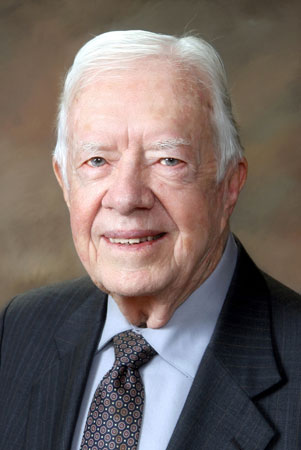
Jimmy-Carter-headshotIt’s hard to believe that anyone would not agree that former President Jimmy Carter’s acknowledgement this week of his cancer diagnosis and the treatment he will undergo was anything but forthright and grace-filled. But now I hear that one of the presidential candidates used it as an opportunity to say something snarky. Really? This particular week?

Except for the sad news about the 90-year-old President Carter’s health, it was a pretty good week for news. Two American women qualified for the Army’s elite Ranger program and the Navy is contemplating opening its prestigious Seals program to military women as well. And then three young American men touring Europe together, thwarted a terrorist attack on a high speed train in France. It was a week to be proud of our country.

Among the most under-appreciated of our presidents, Carter got the world tantalizingly close to a chance for peace in the Mideast. But he was ridiculed during that time’s energy crisis for turning down the White House thermostats and advocating wearing sweaters against the chill – and even more for directing installation of solar panels on the building’s roof. When voters denied him reelection to a second term, he returned home to Plains, Georgia and launched a new career as an international statesman, author and head of the now more than three decades-old Carter Center. The non-profit public policy organization was founded by Jimmy and Rosalyn Carter for, as the website states, “waging peace, fighting disease, building hope.” Its accomplishments are recognized around a grateful world.

When, in one of his first actions incoming President Ronald Reagan ordered the solar panels removed, it was mean and vindictive. Also shortsighted.

Imagine where this country’s energy consumption would be today if that largely symbolic act of placing solar panels on the White House roof had been followed by a rigorous incentive program of rebates and tax credits to encourage businesses and homeowners to begin using free energy from the sun. But of course Congress and their fossil fuel benefactors couldn’t allow that to happen. But still, just imagine.

Waiting for El Niño? No, the PDO

“I think you should stop writing about the weather,” my in-house editor said recently. I know he’s right but I can’t help myself. As someone on KPCC, our local public radio station, remarked the other day, “Californians talk a lot about the weather.”

Back before everyone became consumed with the drought and the hoped-for coming rains of winter, morning walkers would frequently greet one another with, “Another beautiful day in Paradise.”To which, even if you felt their remark might be tempting fate, the only polite reply would be, “Mmm, yes.”

But now there’s a new weather change on the horizon and it involves something with the unwieldy name of Pacific Decadal Oscillation or PDO. According to a report by Southern California Public Radio’s Sanden Totten, new forecasts on the El Niño climate pattern indicate “it could be one of the strongest on record. And… it could deliver much needed rain to Southern California and possibly northern parts of the state, too.”But,” he notes, “El Niños are usually fleeting, lasting only a year or two.”

In contrast, he says, “Evidence is building that a longer-term climate pattern — one that might bring years of rainy winters – could be forming in the Pacific well north of the equatorial waters that give rise to El Niño.”

Nathan Mantua of the National Oceanic and Atmospheric Administration explains that “the PDO has a warm phase and a cool phase, and each can last anywhere from a few years to decades.” He says “the PDO has been mostly in a cool phase since 1998, coinciding with some of California’s driest years on record.”

PDOTotten talked also to Bill Patzert of the Jet Propulsion Laboratory “who thinks it’s this PDO pattern that is responsible in large part for the severe drought in the region. However, since January 2014, the PDO has been shifting into a warm mode. .and could be the drought-buster the state has been hoping for. Perhaps in the long term, rooting for a (warm) PDO…is probably the most important thing for California and the American West,” he said.

And then what will Californians talk about?

Graphic: JPL/NASA