The Friend, A Movie Well Worth the Wait

The moment I learned that the National Book Award for fiction winner centered on a Great Dane, I was out of my home and on my way to a bookstore for a copy of “The Friend.” The 2018 book by Sigrid Nunex has been described as a story of love and loss and also about grief as experienced both by human and animal survivors. It spoke to me in any number of ways. 

Not only am I crazy about Great Danes, but they often figure prominently in my annual Christmas letters to friends and family. At a recent holiday party hosted by former neighbors who had known only my last dog, Lotte, I was greeted with the words: “Did you really have nine Great Danes?”  “Not all at once,” I assured them.

I had to chuckle to myself at the horror of neighbors thinking that someone might move in with nine giant dogs! As it is, I have moved to a pretty small apartment with a size limit to the dogs that are not allowed. This of course precludes Great Danes, the breed known for sleeping away great swaths of their days. Many small, yippy dogs are allowed (although, fortunately, most are sweet and mostly quiet). On some occasions, though, I do wish I’d recorded one of our Great Dane’s deep-throated barks to quiet incessant yipping. Just open a window and push the play button “WOOF!” It worked in real life, trust me. Like a grumpy old man whose mid-day nap has been interrupted.

Obviously, I devoured Nunex’s book and purchased additional copies to give as gifts. Once I’d learned a movie was in the works, I made a pest of myself to all family members and friends who might have known our dogs down through the years, sending snippets of information about the film’s progress.

Aiding me in my obsession about “The Friend”: Nick Paumgarten’s richly detailed story in The New Yorker. 

Two cinematographers, David Siegel and Scott McGhee, partners in more than 30 years of movie making, reacted to “The Friend” much as I had. But in their case, because they are movie makers, they moved quickly to secure the movie rights from the author, inviting her out for coffee and discussions that resulted in a signed contract and an intensive search for a star, the dog to play the part of the grieving animal. 

They turned to a world-renowned animal trainer, Bill Berloni whose credits include dogs and other animals we’ve all loved and cried over in movie roles. Berloni’s first demand was “change the breed of dog.” “Great Danes,” he said, “are big and dumb, lazy and impossible to train.” The two moviemakers and all the others involved in the production said “no;” the breed of the dog is central to the story. The dog stayed.

Berloni and the others traveled to meet dogs in many states until their auditions’ file had more than 30 headshots of prospects. One dog from Anchorage was auditioned during a visit to New York for the Westminster Kennel Club show.                                                                                            

Ultimately, Berloni found the perfect Dane to play the lead dog, Apollo. The dog star was a Great Dane named Bing, who not only landed the role, he changed the trainer’s opinion of the breed. “Great Danes are intelligent and sensitive,” he told the producers. “And moreover, if you don’t use this one, I’m going to represent him.”                                                                                          

A friend who has retired to the northwestern United States often sends me articles that include mention of the breed and I was hardly surprised when his clipping of the same New Yorker article arrived.  I thanked my friend and said, ‘I’m way ahead of you this time, but isn’t it a wonderful piece?” I placed his copy of the New Yorker clipping next to mine and said “I can’t wait for the movie.” 
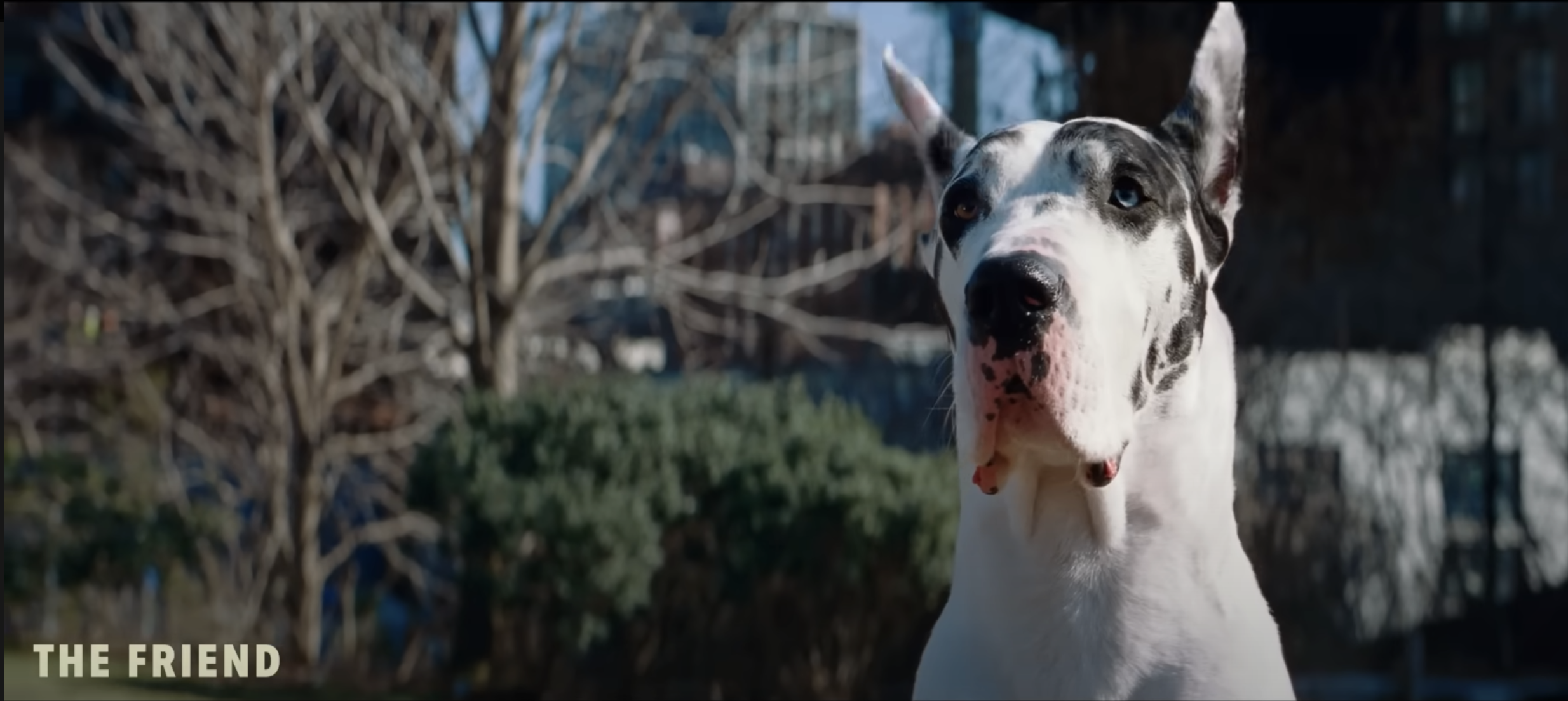
But wait I did, along with many other dog lovers as scheduling conflicts and then the actors’ strike delayed the movie again and again. As I followed the progress, I also peppered friends with quotes from people involved with the production. (“Being seen with a dog like this is like being seen with a rock star.”)

Four years went by before progress on the picture resumed. Bing was now six years old. Nunez was not involved in making the film but was nevertheless anxious about whether the big dog would hang in long enough to participate. Great Danes have many wonderful qualities, but longevity is not among them. The New Yorker article cites an average lifespan for a Dane as eight years. When we started our Great Dane obsession in the early 1960s, the stated average life span was seven years. And with the experience of living with nine of them, I can say that’s about right. We had one that lived past 10 years, but most were with us for far less time. It’s heartbreaking, but Great Danes are worth it. 

Both of my daughters grew up with Great Danes, and of course, I hoped they’d get to see a film with a real Great Dane, not a cartoon version – or a cartoonish version, like the 2002 “Scooby-Doo” film. Ed and I went to see that one and were the only adults in the theater not accompanied by children. I hated it. I would have walked out — but I didn’t want to spoil the experience for the kids in the audience. I remember the film manipulates the dog’s mouth somehow so it seems as if he is speaking. It was creepy and dumb. 

And then finally, earlier this year, “The Friend” was released in theaters. I went to see the film with one of my daughters — and loved every minute of it. Again, I was on a mission to encourage everyone to also go see the film. But movies don’t stick around in the theaters as long as they used to. In what seemed like no time, “The Friend” was no longer on the big screen. But  then, wonder of wonders, I saw a notice that Netflix has “The Friend.” Finally!

I encourage you to watch “The Friend.” I will be watching it again.

Note about the art: At the top of the page, you will see my beloved Great Dane bookends (credited by the artist, Louise Peterson, as “Claynines”). We collected a lot of Great Dane art over the years — including several sculptures by Peterson (you can find her website here: www.danesculptor.com). A friend recently tried to count all the Great Dane art (including everything from sculptures and paintings to calendars and fridge magnets) in my apartment. I think she got to 80, but might have missed a few. After I saw “The Friend,” I was pleased to see one of my Dane figurines had similar black-and-white coloring as Bing.

An Earthquake in New York and an Eclipse.  What’s Next? Oh Yes, a Trial.

It’s been a big news week. 

First, the California daughter showed up at my apartment asking if I had spoken to the New York daughter. Not yet, but I’d been following the TV news of the East Coast earthquake — very unusual for that part of the country —  and noting the map locations so familiar to me. I guess the sensation of seeing those familiar place names on the TV screen was so unsettling to me that I neglected my motherly duty and did not immediately call to check on the New York daughter. Fortunately, the California daughter had done so and filled me in. Even the Empire State Building itself had checked in with a message: “I am fine.” Such an inanimate text message was a better mother than I. It’s just that I remember how excited I’d been to experience my first earthquake since moving to Southern California and how jaded were strangers’ reactions to my excitement.

The Californian reported that her sister and brother-in-law were fine but that the New Yorker admitted it was scary even though nothing had fallen from any shelves. The 1940 building is, coincidentally, in the borough where my parents moved when I was a newborn before moving to New Jersey.  By the time I caught up with the New Yorkers’, their worries revolved around the possibility of after-shocks which, they learned, could occur long after the original jolt. 

What about the cat? I finally asked. Their 12-year-old cat had been awake early, demanding to be fed and then went back to sleep, missing all the excitement. The New York daughter told me that she had done much the same when she traveled to Tokyo years ago. After the 13-hour flight, she was so exhausted that she’d slept through a small earthquake on the first night.

And I don’t think I’ll ever see an eclipse like the recent one witnessed by people in the so-called path of totality. The gatherings of people on picnic blankets wearing eclipse glasses looked wonderful. But watching the television coverage was the best I could manage with my arthritic spine problems. 

Next up, I’ll be back in front of the TV for the first-ever trial of a former US president. 

Non-news junkies miss out on so much. 

Followed By Forks Wherever I Move

When I sent my daughters the link about the house next-door to our former home, I told them not to miss the additional item about the street the younger daughter would trudge up every day from school muttering, “I hate my parents, I hate my parents, “What’s this thing they have about living on hills?”

https://patch.com/new-jersey/montclair/when-you-get-to-the-fork-in-the-road-take-yogi-berra-way

She got it right away. “Oh, the fork in the road quote! ‘When you come to the fork in the road, take it.’ Because either fork will get you to Yogi Berra’s street. Neat.” (She also mentioned a typo, but in a family of writers and former journalists, that’s bound to be brought up.)

My late husband Ed had been a Yankees fan since childhood, even living in small Colorado towns, so the nicest thing I could do for him when I headed public relations at Montclair State College (now University), was to get him assigned to write an article on our neighbor for a Montclair State magazine. I did not go with Ed, but remained home imagining how thrilled he must have been to be seated in Yogi Berra’s study surrounded by Major League Baseball memorabilia, — two old men exchanging baseball trivia — while Ed tried to concentrate on the the notes he was taking.

Of course the article turned out well, but Yogi never could remember Ed’s name, always calling him “Kid.” “How you doing, Kid?” he’d say at the Yogi Berra Museum on campus or elsewhere. When Carmen Berra was still alive, she’d say, “Oh Yogi, you know Ed. He’s our neighbor.”

As for other forks in my meandering life, here’s another one in Southern California I wrote about. https://patnieder.com/2016/05/27/forking-over-some-facts/https://patnieder.com/2016/05/27/forking-over-some-facts/

Wild Dogs’ Epic 1,300-Mile Run through 3 Southeast African Countries and Back (for Now)

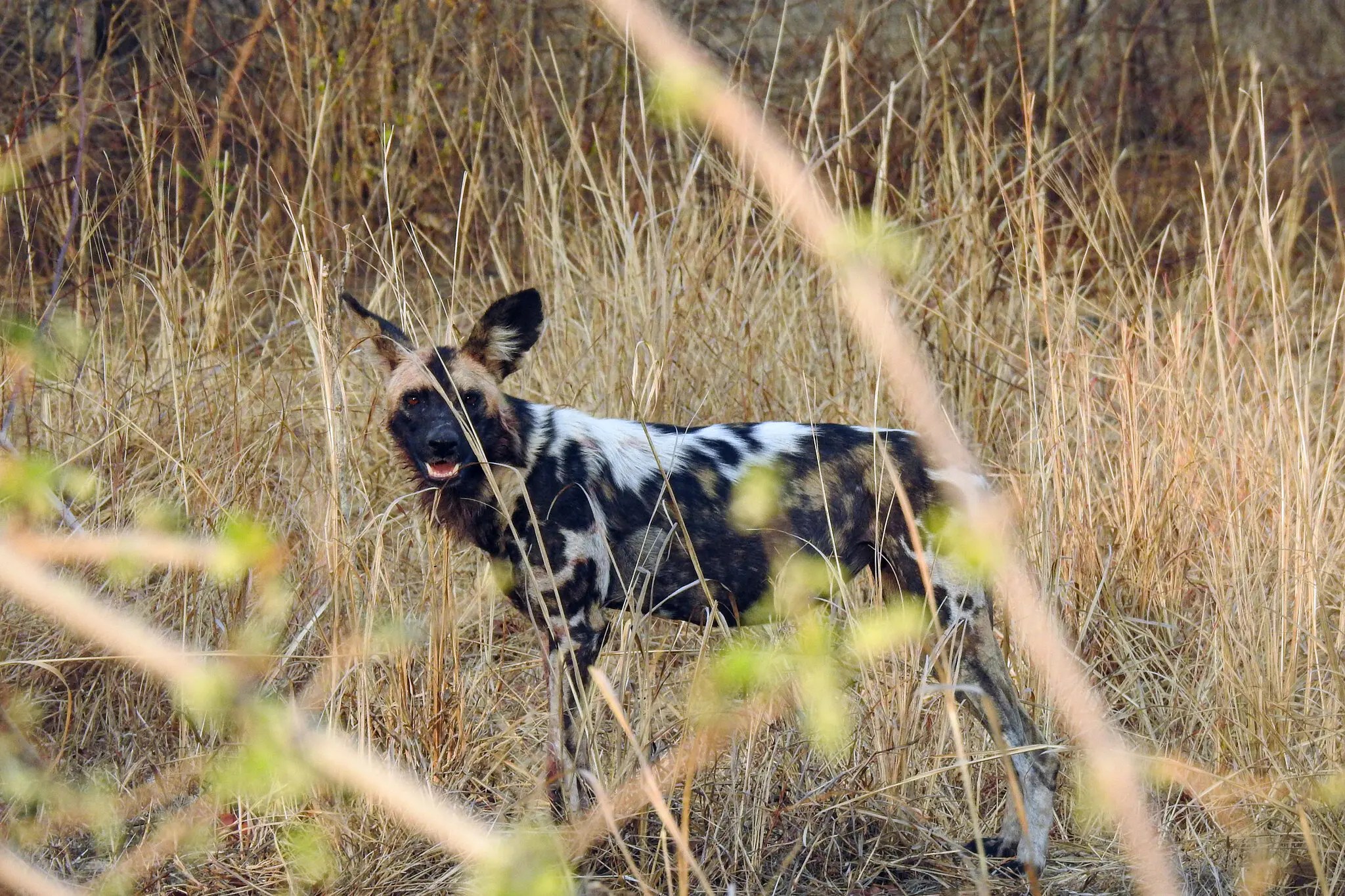
Photo: Zambian Carnivore Programme

Natalie Angier ‘s article for The New York Times earlier this month set the stage thus: “The three sisters knew they had to leave home. They were African wild dogs, elite predators of the sub-Saharan region and among the most endangered mammals on Earth. At 3 years old, they were in the prime of their vigor, ferocity and buoyant, pencil-limbed indifference to gravity. If they did not seize the chance to trade the security of their birth pack for new opportunities elsewhere, they might die as they had lived: as subordinate, self-sacrificing maiden aunts with no offspring of their own. . .”

So, Ms. Angier wrote, the trio set off in October of last year “on the longest and most harrowing odyssey ever recorded for Lycaon pictus, a carnivore already known as a wide-ranging wanderer. Over the next nine months, the dogs traveled some 1,300 miles, which, according to the scientists who tagged them, is more than twice the previous record for the species.

The trio was tracked throughout the entire nine-month journey by a GPS collar installed and monitored by Scott Creel, an ecologist at Montana State University, and his colleagues at the Zambian Carnivore Program. While the tracking device was on just one of the dogs, Ms. Angier explained, the researchers were fairly confident the three stayed together entire time, based on the animals’ dependence on one another and their aversion to solitude.

“Wild dogs are beautiful in a brutal, be-glad-you’re-not-an-impala sort of way. They have black faces, glittering amber eyes, camo-printed coats of white, black and tan, white-tipped tails and large oval ears that are as tall as their snouts are long. . .Having separated from other canids some six million years ago and evolved in eccentric independence ever since, even their vocalizations defy family norms . . .(they) don’t howl or bark like wolves or domesticated dogs; they twitter, chirp, squeak and hoot like birds.” — Natalie Angier

Now back where they started in their birth area in Zambezi National Park, Zambia, what will the sisters decide to do? Settle down or set off again? Let’s just hope no one tells them that in some other areas of the continent, wild dog relocation projects involve truck and plane transport followed by temporary housing while they acclimate to their new area. Nah, our three girls are too tough for that.

Here We Go Again!

Election time. Here’s how a state that wants to assure everyone eligible to vote is given every opportunity to do so.

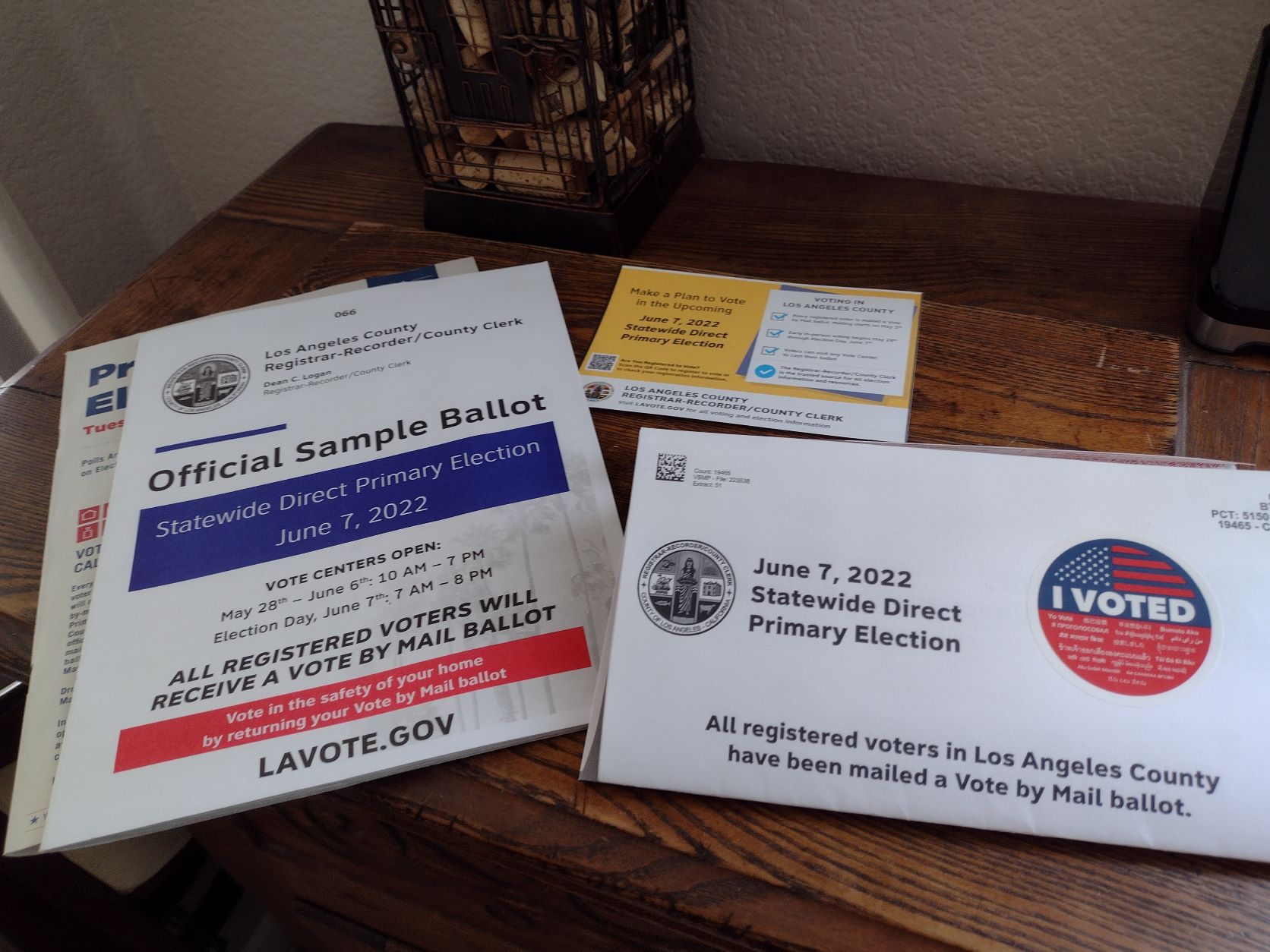
The packet of information that appeared in my mailbox a month ago included everything required for me to vote in the upcoming Primary Election and then later, the entire process to be repeated in the General Election in November: Dates and locations for voting early, by postage-free mail or in person through Election Day, June 7. Locations and hours for convenient Ballot Drop Boxes. and a website for a full list. A way to request a ballot in a different language. Or to obtain a replacement ballot. And my personal favorite: Where’s My Ballot to subscribe and receive notifications and track your ballot every step of the way. If it’s good enough for a package from Amazon, it’s certainly worthy of my ballot.

Contrast those practices with elections in other places where voters stood in long lines in the frigid cold or suffocating heat and denied as much as a sip of water by election volunteers. Every time I learn about something like that I remind myself not to be so critical of the state I’m living in now — even if it did run a costly recall election a year before the Governor’s scheduled (and successful) re-election.

And let’s not even mention those states with ridiculously gerrymandered district lines designed to exclude persons of one race from gathering with too many like persons to cause a voting block. Or as one person I admire from another state had explained, “Some people don’t want some people to vote.”

Scenes from last time in Georgia.

One Degree of Separation: Look Who’s a Sister!

Until the latest issue of The Adelphean arrived in my apartment’s mail cubby, I had no idea that PBS News Anchor Judy Woodruff and I were sorority sisters — albeit in different decades and on different college campuses, not to mention way different degrees of journalistic achievement. But she is someone I’ve always admired, and before I became addicted to watching political coverage on MSNBC — not just nightly but many times throughout the day depending on breaking news alerts — I was likewise addicted to the news coverage presented by Public Television. Those two companies, plus CNN, are my go-to sources for honest, forthright TV news coverage.

Woodruff’s more than five decades of experience covering the news earned her the distinction, in the opening words of Rebecca Desensi Sivori’s cover story introduction, “As one of the most trusted names in journalism.” It also made her a logical choice to receive the inaugural Peabody Award for Journalistic Integrity last June. Beginning in 1940 at the Grady College of Journalism and Mass Communication at the University of Georgia, Peabody Awards are presented annually in such categories as news, entertainment, podcast/radio, public service and more. The awards committee could not have chosen a better year to rectify an overlooked and much-needed category for recognition. The awards website seemed to acknowledge as much with its statement that Woodruff’s award “honors the sustained achievement of the highest professional standards of journalism, as well as personal integrity in reporting the news in challenging times.”

Desensi Sivori, Central District Adelphean editor, also acknowledged the award’s significant timeliness as she began her interview, coming as she observed, “during a period of history where there seems to be a growing distrust of media outlets.”

Asked what integrity in journalism means to her and how she has implemented the principle in her career, Woodruff replied, “Integrity goes to the core of what we do as journalists. It is all about telling the truth. It’s about being faithful to the facts, to fairness, to treating people we cover with respect. At the same time, we hold people in positions of power accountable. It goes to the very essence of what we do as journalists, and especially those of us who are privileged to cover government officials, elected officials, the people who make decisions for all of us. It goes to the heart of what we do and who we are, and so this award means everything to me.”

Originally planning on a career in government, Woodruff was advised by a colleague to consider covering politics instead. Soon to graduate in 1968 with a journalism degree from Duke, she followed his advice and drove to Atlanta over spring break where the only entry level job opening in television was at WQXI. There the news director offered a position as newsroom secretary. When she stood to thank him, he said, “Of course. Besides, how could I not hire someone with legs like yours?”

Ah yes. The more things change . . .

I found this article fascinating of course even though my own experience entering the journalism field dated from the previous decade. Graduating in 1960 with a journalism degree from the University of Missouri, I had the luxury of an employed husband that enabled me to get my foot in many newsroom doors by filling in for vacationing secretaries while waiting for a reporter opening. The first of these was at the Sacramento Bee after a brief stint in their radio station upstairs. At the time, The Bee had no intention of overruling the city editor’s injunction against women reporters, so I filled in for a vacationing secretary until landing a reporting job in the women’s department. Likewise, at the San Francisco Chronicle where one lone woman held fast to the only female-held city room job. Finding myself alone in the elevator one evening with that paper’s city editor, I confronted him about his gender-diversity situation and was told he did not hire women because they cried when he yelled or cursed at them. I’m sure I was not quick enough to point out that expletive-laced New Jersey-speak was my native language and that it could be resurrected as needed anytime. Also, there was no way I’d let him and a city-room full of male reporters see me cry.

In 2013, Gwen Ifill and Judy Woodruff became the first two women to co-anchor a national news broadcast, the PBS News Hour. After Ifill’s untimely death in 2016, Woodruff became sole anchor of the program.

I’m sure the news director’s comment about Woodruff’s legs was met with an indulgent if long-suffering weak smile. Having had a front-row seat observing the move of women into formerly all-male workplaces, I must point out how much worse it’s gotten through the years. When I made my way down the steep steps to The Bee’s press-room, teetering in spike heels and pencil-skirt suit, the pressmen with paper hats and ink-stained fingernails could not have been nicer. Just as long as I knew not to touch with anything but the tip of a pencil any portion of the lead type page form I was there to examine. (Doing otherwise would cause the entire room to empty out on strike.) Likewise, the San Francisco Chronicle photographer whose Iwo Jima flag-raising photo garnered him respect and awe among young newsroom staff but still years later was required to drive a woman’s department reporter to a society function photo assignment. He was pleasant and courteous to me as well.

What happened in the intervening years? I guess back when women’s presence was a rarity, men behaved as they did outside the workplace. But as more and more women moved into previous men-only workplaces, they were seen as threats. Or is it part of the general coarsening of American society overall? In the 1980s, I took a job as public relations director at a state college, now university, and my boss, a man, related how my addition to the non-teaching professional staff on campus was greeted by a contingent of men in one particular testosterone-heavy office. “Does she fool around?” they asked. My boss said he didn’t know but that I was married and that my husband was very tall!

Ed and I had a good laugh over that. Good grief.

The Adelphean is a quarterly educational journal of college life and alumnae achievement. It is the official publication of Alpha Delta Pi, oldest secret society of college women in the world, founded May 15, 1851 at Wesleyan Female College, Macon, Georgia, the world’s first chartered college for women.

An Orphan Elephant Inspires

Each morning, I stumble downstairs to retrieve a newspaper — or even three on Sunday, and possibly more written material clogging my neglected mail cubby — and reflect on this masochistic attraction I seem to have for keeping up with the news during these still mostly depressing times. But one recent morning, back upstairs in my apartment, coffee poured and comfortably settled with that day’s New York Times, I was surprised to find myself smiling over a sweet story about a baby elephant found alone and helpless on a riverbank in Africa.

Smiling? Has the paucity of feel-good news these days turned me into some kind of heartless news junkie? I hope not. No, Elizabeth Preston’s story quickly got into a heartwarming account of the efforts by villagers, schoolchildren, wildlife authorities locally and around the world, international animal welfare organizations, and DNA experts working to assure the elephant’s continued health and safety, and even perhaps enable the orphan’s return to the wild with her biological family.

Some of this seemed vaguely familiar. sending me to my travel journals from African trips in 2004 and 2009 when I accompanied my cousin Dorothy Woodson, then curator of African collections for the Yale University library, now retired. Why haven’t I written more about those wonderful experiences? Senegal, Mali and Burkina Faso in West Africa and South Africa, Mozambique and Namibia in the south.

And where was it that I learned about the annual migration of elephants traveling from near the border of Burkina Faso 1,000 kilometers to Duenza in Mali? It is thought to be the longest journey conducted by elephant herds and welcomed as a sign of the coming rainy season.

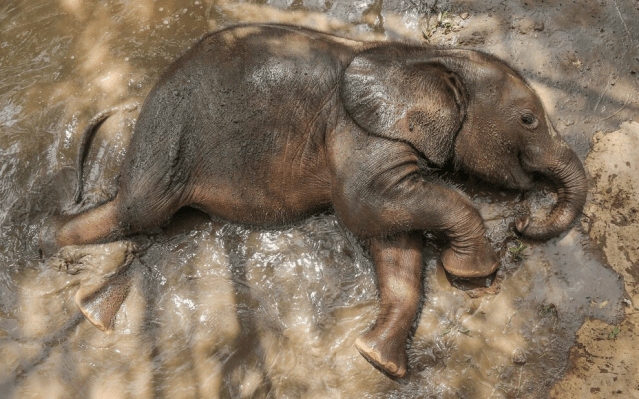
Reading Ms. Preston’s article, I came to the happy realization that I have been close to the very place where rescuers brought the young elephant after finding her in 2017 wandering alone near Bonomo in Burkina Faso. Only two or three months old, she had been separated from her family just a day or two, according to wildlife experts who said she would not have survived otherwise. When orphan elephant calves are rescued, Ms. Preston wrote, they are usually found near a mother’s carcass, but in this case, no one knew of an adult that had been killed. “Although elephant mothers are extremely attentive, [this baby’s] family left her behind for some reason — perhaps at a nighttime river crossing that the tiny elephant couldn’t manage.”The villagers sought help from the local wildlife authorities who took the elephant to a pen outside their headquarters in Bonomo. There, “local residents pooled resources to buy milk for the elephant, and a drugstore donated powdered infant formula. But the young elephant’s appetite, unlike the funds of the humans helping her, was bottomless, The humans needed help.” Ms. Preston wrote. They reached out to the International Fund for Animal Welfare for help, and the group took charge of the elephant’s care.

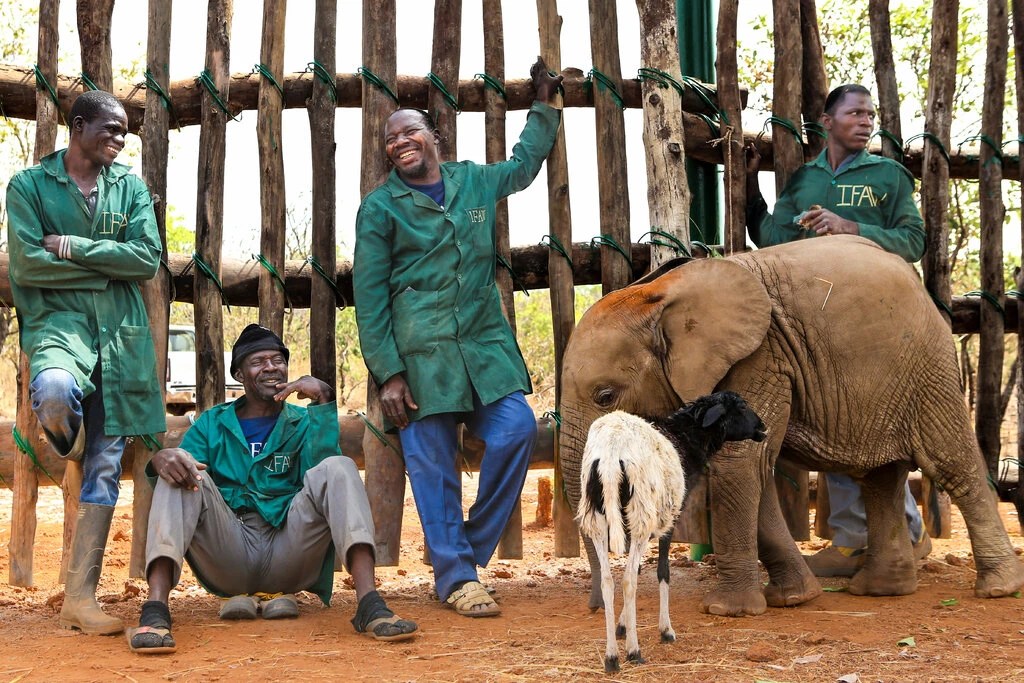
Local schoolchildren named the elephant Nania, a word for will and visited daily, along with a black and white sheep named Whisty who became her best friend. DNA analysis indicated that Nania and her relatives are forest elephants, recently recognized by the International Union for Conservation of Nature as a distinct species, separate from Africa’s larger and more numerous savanna elephants. It also declared them critically endangered. With that information, the project became “about more than just rehabilitating one young forest elephant, but ensuring the future of her species.”

In February 2019, weaned and no longer requiring bottles of milk, Nania moved into a home specially built for her inside the nearby national park Deux Balés where, Ms. Preston wrote, she could start learning how to be an elephant. It includes a stable where she stays at night, and a large fenced pasture called a boma. Also living there is the “loyal sheep friend Whisty and four keepers who stay in pairs, a week at a time. Each day, the elephant spends six to eight hours roaming the park with her keepers in an effort “to help map the wilderness in her mind and learn where to find water and tasty fruits.”

It is unclear from the Times article whether Nania even realizes yet that she is an elephant. Hanging out with a sheep and her keepers, trying to run after visiting schoolchildren and join their play, and barging into the building where her milk was being prepared — none of that helped in the realization process, and the article says the first time she encountered a herd of wild elephants, she fled.

Orphan elephants have been accepted into herds of non-biological relatives, but the choice is up to the family. “Nania might have a chance to join not just any family of wild elephants but her own,” Ms. Preston wrote, explaining that only about 40 wild elephants pass through that park, and the team from the International animal welfare fund figured that Nania’s family could be among them. To find out, they began sending samples of elephant dung to a lab at the University of Washington in Seattle for DNA testing. The results were startling: According to the lab, “One of the sampled elephants was not just a relative, but almost definitely Nani’s mother.”

Any hoped-for reunion will have to wait now the wild elephants have migrated out of Deux Balés for the rainy season that will end sometime in October when, the Times article notes, “Maybe Nania — a little bigger and fatter, a little more confident — will be ready for the returning elephants.”

And if Nania eventually joins a family — her own or a foster one — the Times article observed, “the international fund team plans to follow up with tracking and more dung sampling to make sure she’s safe — and to learn whether, against all odds, she has found her mother.”

(Boromo is located a few hours southwest of Ougadougou, the country’s capital, where airline scheduling problems caused my cousin and me to stay longer than originally planned. Local people recommended a side trip to Bobo. Heading back to Ouago, as the locals call it, we decided on another side trip to Banfora, about halfway there, where, about 10 kilometers off the highway is the national Parc des Deux Balés where elephants come to get water. At the end of a long dirt road, we found an encampment at the river’s edge with a long deck built over the water and set with tables, chairs and a bar. We stopped for lunch and learned from fellow diners that about 60 elephants had come by a few days before but none since. Had we ventured farther into the park, might we have encountered a young Nania walking with her keepers? One can only dream.)

Recall: Another Weird California Tradition

Recall: Another Weird California Tradition


After five cross-country moves, I’ve voted in many California elections. But this is the first time for me to experience an election to recall the state’s governor. The last time, in 2003, I watched from New Jersey as Californians voted to oust Gov. Gray Davis, a Democrat, who was succeeded by Republican Arnold Schwarzenegger. “What gives with your sometime state?” friends asked. “Beats me,” I’m sure I responded. This time, I put the question to a California native who told me the state’s recall tradition reflects its residents’ strong adherence to populism.

Other observers have called it crazy, nonsensical, undemocratic, even unconstitutional. Also unnecessary and a waste of taxpayers’ money. This year’s effort is expected to cost $276 million.

The California Secretary of State’s website informed me that there have been 179 recall attempts of state officials since 1913. “Eleven recall efforts collected enough signatures to qualify for the ballot and of those, the elected official was recalled in six instances. One recall effort is currently qualified for the ballot to be held on September 14, 2021.”

Even before receiving my vote-by-mail ballot sent to all registered voters, I was confused about how it all worked. First of all, unless an incumbent is found guilty of a crime and needs to be removed from office immediately, — or dies or just quits — even then, what’s the lieutenant governor for if not to step into the top spot when needed? That was part of the appeal to me for Newsom’s election last time. I figured he’d had some on-the-job training or at least knew what to expect.

And, why go to all this trouble to replace a governor whose term will end in a little more than a year? And who are all these 46 candidates I heard were lining up just to fill out the recalled governor’s term? And how did they make it onto the ballot in the first place? If you think all of this is complicated, wait till you hear the answer to that. They must obtain signatures from a percentage of votes cast in the last election for the office, which obviously is a figure that changes from election to election. This time it was 12 percent, which for the current recall, it was about 1.5 million signatures.

I got those figures from an online piece by longtime Los Angeles Times political columnist George Skelton who examined the argument made by UC Law School Dean Erwin Chemerinsky “about possible legal flaws in California’s 110-year-old recall system,” [one in particular means] “it’s possible that Newsom could be recalled…by a bare majority of votes…he could receive 49.9 percent of the vote and still be dumped…Then…his successor could be elected among the large field by a small plurality of, say, only 25 percent.”

Skelton concludes, “So, Newsom could receive nearly twice as many votes as the winner but still lose.” Huh?

The arrival of my ballot only added to the confusion. I puzzled over the rules as I examined its two separate sections. The top section required merely a yes or no vote on whether the current governor, Democrat Gavin Newsom, should be removed from office. If my vote was to be no, I was home free. If I voted yes, then which of the 46 listed candidates would I prefer? And to complicate matters more, there was a space at the bottom for writing in a candidate. I was glad to go online at LA Times.com and see I was not the only one confused. Some people wondered whether in order to assure the governor’s remaining in office, they should write in his name. I had pondered that until I found these words somewhere on the ballot instruction: “Do not vote for more than one person.” So that would rule out writing in Newsom’s name after, in effect, checking the no recall box. According to LA Times’ Skelton, it would invalidate the ballot.

Since returning to live in California, once more, I have surprised myself by becoming a fan of mail-in ballots. As I wrote in Time for Vote By Mail, my conversion came about during the coronavirus pandemic when Milwaukee voters were forced to stand in freezing cold rain for hours to vote because of reduced facilities, one of many shenanigans perpetrated in recent past elections throughout city areas, especially, to make voting difficult. This has been done, as Senator Raphael Warnock of Georgia has explained benignly, because “Some people don’t want some people to vote.”

So, after puzzling over the confusing recall ballot and signing up for tracking service – if it’s important enough for packages from Amazon, it’s certainly worth the same for my vote – I walked over to the nearest drop-box as I had the last time and began checking until the email message that assured me “Your ballot has been collected and your vote recorded.” Good. One less thing to worry about.

Political columnist Skelton continues to join others fretting about the state’s recall system. A more recent column was headed, “California recall system must be reformed. It’s bad for taxpayers and, some say, democracy.”

Do Not Disturb. Woman Languishing.

So that’s what to call it, “languishing,” this feeling  of inertia that’s lasted for more than a year. As described recently by organizational psychologist Adam Grant in The New York Times, it may turn out to be “the dominant emotion of 2021.” Swell. Those of us hoping the tide would turn as the early months of the new year unfolded and life began to resume some semblance of normalcy might be in for disappointment.

The first I heard the term “languishing” used in this regard I immediately pictured a 19th century woman, corset cording cinched too tightly, back of one hand pressed to her forehead, and heading toward her fainting couch. No corset lacing and no fainting couch here, but I did like the term. Better than my usual description of my own slug-like behavior this year.

My wonderful huge unabridged edition of The Random House Dictionary of the English Language, which sat in a place of honor atop a mid-century modern version of a roll-top desk everywhere we lived now is relegated to the kitchen table, where it provides height for zoom sessions on the laptop. Retrieving it from under that location, I opened the book to read all the definitions of languishing, starting with “becoming languid in any way…” Okay, what about that word, languid: “1. drooping or flagging from weakness or fatigue, faint (the couch!)… 2. lacking in vigor or vitality, slack…3. lacking in spirit or interest, indifferent…”

Most of that sounds like me during pandemic-related lockdown. When I would report to a daughter how little I had accomplished that day, she assured me she was hearing similar stories from many of her friends, much younger people with work-from-home jobs and regular paychecks. The early days of COVID-19 were truly frightening. Even if you were fortunate enough to escape actual symptoms, awareness of the dangers exacted a toll. Mr. Grant, the Times’ author, writes that “as the pandemic has dragged on, the acute state of anguish has given way to a chronic condition of languish.” Calling languishing “the neglected middle child of mental health,” he wrote, “it’s the void between depression and flourishing — the absence of well-being. You don’t have symptoms of mental illness, but you’re not functioning at full capacity…” 

“Languishing,” his piece continues, “dulls your motivation, disrupts your ability to focus and triples the odds that you’ll cut back on work. It appears to be more common than major depression, and in some ways it may be a bigger risk factor for mental illness.” An antidote may be found in a concept called flow, “that elusive state of absorption in a meaningful challenge or a momentary bond, where your sense of time, place and self melts away.”

I remember that feeling, and I miss it. Sitting alone with my thoughts was helpful to me as I adjusted to a  changed lifestyle, but I think it’s time to take the advice offered in this article and get on with the task of transcending languishing. Among suggestions offered: Tackle a challenge that stretches skills and heightens resolve. Like finally getting back to regular blogging on this long-neglected website.

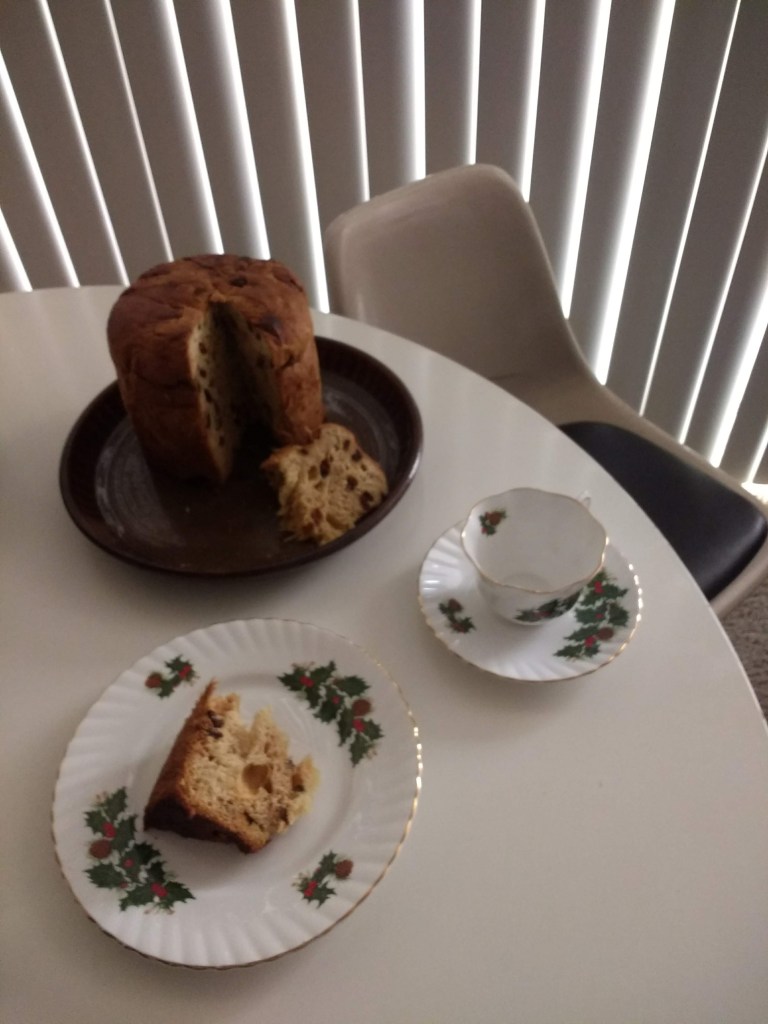
A Two-Panettone Year

On Christmas Eve afternoon, after dropping off the second half of my Christmas letter mass mailing at the nearby post office, I continued a few blocks to my Walgreens to pick up a couple needed items to get me through the holidays. Just inside the door, a stack of large square boxes, bright yellow with red printing that announced the presence of panettone, a dessert that shows up in American stores around the holidays.  

Grabbing a box as I headed to the checkout counter, I confessed to the young woman waiting to ring up my purchases, “I already bought one of these here last week.” She agreed with me that the year just ending justified my purchasing a second one. She had the good grace not to ask if I’d eaten the entire first one myself.

Grabbing a box as I headed to the checkout counter, I confessed to the young woman waiting to ring up my purchases, “I already bought one of these here last week.”  She agreed with me that the year just ending justified my purchasing a second one. She had the good grace not to ask if I’d eaten the entire first one myself.

The store was, like the post office and the streets outside, sparsely occupied so we were able to continue our discussion of panettone. “It’s Italian, isn’t it?’ she asked. “Yes,” I replied, “and I’m half-Italian. But I don’t remember it being a fixture on my grandparents’ holiday table except only occasionally, perhaps brought to them as a gift. I was sure I wouldn’t like it, so it was not until way into adult years that I learned I’d been missing something. A dessert not too sweet, with a consistency somewhere between cake and bread. “How do you eat it? Do you heat it up?” she asked. “No,” I answered. “I just grab off chunks and eat it with a glass of chilled white wine before dinner.” ( However, in the past I’ve been known to eat chunks of it in the car, without wine, while driving home from the store.)

“Do you like fruit cake?” she asked, alluding I guessed to the glazed fruit pieces in panettone. “Fruit cake? Only sparingly and only if it’s loaded with nuts to make it interesting,” I said.

“I’ve only tasted the one with chocolate , but I guess they didn’t order any this year,” she said. “No,” I told her,  “there’s a separate stack of those down that other aisle,” and I pointed over my shoulder.  “I appreciated they kept them separate so I wouldn’t grab one by mistake. I’m a big chocolate fan but not in panettone. I’ve never tried it, but it seems wrong somehow.  A desecration of both foods.”

“You should write about it,” my new acquaintance said.

“Funny you should say that, I said. “That’s what I do, write.” (Except when I don’t.)

I’ll have to go back and show her this. And ask if she tried the panettone without chocolate chips.