Ages of a Woman

At age fifty, I decided it was time to stop buying the same drugstore perfume I’d first received from a high school boyfriend whose brother worked for the company. I must have mentioned this to my daughter who took it upon herself to find me a more grown-up scent. A New York performing artist then going through her counter-culture stage in life, she went to a big department store and spent a considerable time sniffing first one perfume and then another until making her decision. My mental picture of this young woman in her torn jeans, paint-spattered shirt and combat boots, rubbing elbows with the fashionably dressed and perfectly coifed, makes me smile. I continued to use the perfume she selected for many years.

At age sixty, I decided it was time to stop buying my makeup in the drug store, so I underwent a “makeover” from the staff of a famous makeup artist. I bought everything they recommended that day and for many years replaced items as they were depleted. Also in my sixties, an opportunity to travel to some remote parts of Africa convinced me it was time to give up the electric hair rollers and the hairstyle I’d worn since college. “A person should change her hairstyle at least every fifty years,” I said.

It was also around that time that I discovered three gray hairs and my hairdresser suggested I camouflage them with highlights. Very subtle highlights framing my face. Somehow, as the years progressed, the highlights became less subtle and I became more blond. Publications were writing about “the graying of America.” My friends and I joked that in our case, it was more like “the blonding of America.” A man told me about serving as an escort for a woman attending her fiftieth high school reunion. “Funny,” she said as she surveyed the room. “I don’t remember there being so many blonds in my class.”

At age seventy, I despaired of ever seeing Italy before I died. So, in spite of suffering with sore feet, I persuaded my husband and a cousin to go for two weeks. We hit eight cities and untold museums and sights. My feet hurt every step of the way. And a great many of my photos show my poor cousin up ahead waiting for her hobbling relation to catch up. I vowed that my seventies would be the time to finally get my feet fixed.

It’s also the time when I began to wonder how much gray there was under all that blond. I look at women with gorgeous heads of gray or even snow white hair and I think, That’s truly beautiful! “The way to do it is to first cut your hair very very short,” a woman recommended. It may also be, I tell myself, a time to hide indoors. Perhaps while my feet heal. But in truth the gray is showing up haphazardly. Salt and pepper, they call it. I’m thinking of it as Nature’s highlights.

So here I am with graying hair and sore feet. I hardly ever remember to wear perfume and at this rate, I have enough to last the rest of my life. Increasingly, I skip making up my face and find myself replenishing my supplies with products from the drug store.

So much for age-related pronouncements. On toward the eighties.
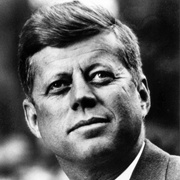
November 22, 1963


JFK

“The President has been shot!” exclaimed a workman poking his head into the room where I was interviewing a local clergyman. I don’t remember how either of us responded, though I might have blurted out “Oh, my God!” despite the presence of a man of the cloth. There were no details. I needed to get to a radio quickly, but to my dismay the clergyman picked up the thread of our conversation and continued with whatever it was he wanted to impart to me and ultimately to our readers. I tried to hurry it along but I was not self-assured enough to suggest we postpone this all for another day. I sat there jiggling my feet and scribbling notes until I was finally able to flee to my car. The radio told me the President was dead.

For us in northern California, there followed a weekend of mind-numbing television, watching the same footage over and over again until that Sunday morning when we watched,  live in real time, the assassin himself gunned down in the police station.

I was women’s editor of a small daily newspaper, The Roseville Press-Tribune. As such, I wrote a daily column – along with everything else in my one to two-page section. On the Tuesday following the assassination, the paper ran my column. Today, the newsprint clipping is yellowed and stained from being pasted in a binder, but here’s what I wrote.

“For those of us ordinary everyday Americans, for those of us who do not live near Dallas, Tex. or Washington, D.C., those of us who spent the past weekend glued to our television sets, the momentous, horrifying, unreal events that transpired will never be forgotten.  The events themselves will be transcribed in history books. But those of us who watched this history taking place will probably remember the events through a haze of varying impressions.

“There was the initial shock, the disbelief, and then the horror that came with acceptance that the truth was indeed true. As the realization sank in, there came sadness. No matter how you felt politically, it could be only monumentally sad to see the film tapes from the networks’ files that showed a smiling, confident, alive President speaking in past interviews and to know this man no longer smiled, no longer spoke, no longer lived.

“There were the impressions we had as we looked at the picture – destined to appear in future history books – of the oath of office being administered to a new President by a no longer obscure woman judge in the cabin of a plane. The look of the man who had wanted once to be President – but not this way. The look of his wife standing beside him. And on the other side, the look of a widow – a dazed, heart-rending look. As women, we tried to imagine her pain, and of course we never could fully duplicate it. We couldn’t because we are not the wife of a President assassinated in a senseless, misguided act. We didn’t hear the shots ring out or hold the dying form of the man they hit. We did not have to explain to two uncomprehending children that a man had killed their daddy.

“But we could try to feel her pain because we knew the truth was true. The President had been assassinated, and through the medium of modern communications we watched and shared a widow’s grief. And we watched, before our eyes, another killing, equally senseless and insane. We spent the weekend by our television sets and wondered, ‘What will happen next?’ It was a weekend filled with impressions. There was the admiration of a woman who displayed amazing strength. She held her children’s hands, and the camera swung in close so we could see again the dazed, sorrowful look of the woman and the quizzical, curious look of the children.

“There were the impressions as we watched the unending line of mourners file past a flag-draped coffin. “It is the Face of America,” said the television commentator, and you thought how right he was. It was the sorrowing Face of America which was all faces. It was light faces and dark faces, thin faces and full faces. It was faces of rich people, poor people, middle-income people. It was all people. It was our people. It was us.

“’How could this thing have happened?’ we wondered. We wondered because we are ordinary, everyday Americans. We are not assassins. We are people who know that in this country, if we do not like the policies of the present administration we are free to work and vote for candidates with other policies. And while the assassination of the President sickened us and made us seethe with anger, we are people who know that we cannot retaliate by reaching out and killing back, killing the man we think was responsible for the President’s assassination.

“We are ordinary, everyday Americans, and we’ll mourn a long time. Not only for a President who died but for our country and ourselves.”

When I wrote that I thought the assassination of a President would be the most horrific public event I would witness in my lifetime. Little could I imagine what others there were to come.

(Photo – John F. Kennedy Presidential Museum and Library, Boston)

Attacking Paul Bunion

250px-Paul_Bunyan_and_Babe_statues_Bemidji_Minnesota_cropMy father used to tell me – probably at the same time he was saying “Puns are the lowest form of humor” – that trying to be funny by using incorrect spelling or punctuation will just make people think you don’t know better. So at the start, I do know how to spell Paul Bunyan. This piece is about bunions – mine – one of which is now gone.

Many people have bunions, men as well as women. They’re those knobby bones on the inside of the foot just below the big toe. They are hereditary, and not, as I used to think, a result of my being pigeon-toed as a child or having engaged in five years of ballet training. Within my own family, a daughter who was not pigeon-toed but danced on her toes well into her late twenties, has bunions. But another daughter, likewise not pigeon-toed, rebelled early on and dropped out of ballet before ever getting on her toes. She, too, has bunions.

According to the Mayo Clinic, bunions form when the big toe pushes up against the other toes, forcing the big toe joint in the opposite direction, away from the normal profile of the foot. “Over time,” they say, “the abnormal position enlarges your big toe joint, further crowding your other toes and causing pain.” In addition to heredity, they also blame shoes that are too tight. And I’d add, how about pointed-toe spike heels?

My worst time with bunions was as a high school cheerleader during basketball season when bouncing down on the gym floor caused excruciating pain. In those days when no one’s parents ever picked up kids at school, I remember practically crawling home in agony after a game. It was evidence enough to convince my father to take me to a foot doctor. All I remember of the visit was that there were two procedures available: One required the patient being off her feet for six weeks, another requiring six months. Never in my life have I had such a window. And so I’d lived with my bunions, just buying wider and wider shoes.

But now my feet presented another swell development, a “hammer toe” next to the big toe that arched itself up into a 90-degree angle that rubbed against any shoe I wore, causing calluses and more pain. So time for surgery. If you live long enough, you get to take advantage of medical advances, such as bunionectomies done as outpatient surgery with the patient walking out in a special boot which she wears night and day until the bones have healed. The surgeon says four to six weeks. I’m pushing for less than four.

When I started this blog, I swore I would not be writing things like “what I had for lunch today.” This piece comes pretty close to that. Please excuse.

Hurry It Up Down There, Will You?

pigeons-on-the-roof

Four pigeons were lined up on a rooftop, three looking down, one on the far end pacing in circles. Several were overall charcoal gray in color so I had to look closely to determine that they were indeed pigeons; their companions’ coloring was more pigeon-like, pearl gray and white. What were they waiting for? Oh, there – a water fountain, two-tiered in the front yard of a house on the hill where the dog and I walked. The fountain water was flowing from the upper level to the lower one and back again. Two or three pigeons were splashing in the water, drinking, bathing or whatever. The ones on the roof were waiting their turn. And the pacing one, what was he waiting for? I could only guess. But perhaps that’s why they put him at the end of the line. I was reminded of that less-than-classy sign some people put near their swimming pools:  “We don’t swim in your toilet. Please don’t pee in our pool.” I laughed at the thought and walked on.