Forking Over Some Facts

Pasadena fork (new)It’s something I usually do not have time for – it’s all I can do to get a couple of posts up per month – but today’s daily word prompt from WordPress was irresistible: Fork.

First thought: Pasadena’s 18-foot wood fork in the road, erected on a traffic island in the dead of one night in 2009 as a gag birthday gift between two friends. It was subsequently taken down and then approved by all the proper authorities including the state transportation department whose land it sits on. (When that happened, the Los Angeles Times headline read “A Fork Whose Tine Has Come.” No end to the puns here.) Today Pasadena’s fork warrants mention and directions on travel sites such as roadsideamerica.com and atlasobscura.com, and provides the setting for food and toy drives, as well as special events like a visit from a touring 6-ton potato belonging to the Idaho Potato Commission.

Since my husband Ed and I are at the stage of life where visits to medical facilities tend to overwhelm our social calendar and since many of those facilities are in Pasadena, we pass the fork frequently. It always makes me smile.

yogi berraIt also reminds me of another fork in the road, this one up the street from the home we moved away from in Montclair, New Jersey 11 years ago. That home was up the street from the now late, always great Yogi Berra whose malapropisms delighted baseball fans and everyone else throughout his life. Hearing him say, “When you come to a fork in the road, take it,” they’d smile and say, “Oh that Yogi,” but what many didn’t realize is that a lot of Yogi’s supposed malapropisms contained much truth. That was certainly true of the fork-in-the-road comment, made while giving someone directions to his home on our street. It was reached by traveling up a hill on a road that divided – a fork – that led either way to Yogi’s (and our) street.

(Our younger daughter trudged up that street every day after fourth grade, muttering curses under her breath toward her parents and their penchant for living on hills. It was just that year, after which came middle school and buses, followed by high school and cars. After college and graduate school where presumably some walking was involved, she moved to Los Angeles and never had to walk again unless she really wanted to.)

Jersey Tomato Redux

tomato on vineSummer approaches and with it my yearning for a really good-tasting tomato. I wrote longingly last year about the ripe, juicy, oh-so-succulent products picked from the vine in my grandfather’s Orange, New Jersey backyard garden or, in more recent years, from my husband’s Montclair, New Jersey backyard garden. But I live in Southern California now, and besides, the once-famous Jersey tomato is a thing of the past.

Well, hold on a minute, not so fast.

Turns out the plant wizards at Rutgers, New Jersey’s state university, have just introduced a reinvented version of a variety from 1934 that, as Valerie Sudol noted earlier this month in The New York Times, “reigned unchallenged for decades.” She explained that after years of work by the university’s plant specialists “this old-fashioned tomato with old-fashioned taste has returned as the Rutgers 250, named in honor of the university’s 250th anniversary.”

That 1934 variety was “the tomato that made the Jersey tomato reputation,” said Thomas J. Orton, a professor in the department of plant biology and pathology. “It was a groundbreaking tomato that redefined what a tomato should be and was the most popular variety in the world,” he said. “At one point it represented in excess of 60 percent of all tomatoes grown commercially.”

The Jersey tomato fell out of favor with commercial farmers after being judged too soft and perishable for modern harvest and transport, Sudol wrote, although it was still suitable for home and small-scale specialty growers.

Many of the most successful earlier varieties, Sudol explained, were the result of collaboration between Rutgers agricultural programs and the Campbell Soup Company based in Camden, New Jersey. A breakthrough in the quest to resurrect a new tougher variety came, she wrote, “when plant breeders learned in 2009 that Campbell Soup still had genetic material from the parent plants that was used to develop the original Rutgers hybrid. The chase was on – in slow motion.”

The intervening years saw researchers working the test fields and greenhouses alongside cooperative extension agents, narrowing the selection until last year when three finalists were grown all over the state and vetted for size, color, yield and disease resistance. “But,” wrote Sudol, “flavor was chief consideration.”

So great is the yearning for a really good-tasting tomato, the 5,000 packets of Rutgers 250 seeds offered on the university’s website in February have already sold out, she wrote. And “then last month, home gardeners snapped up 1,200 seedling plants in just two hours at a campus event…”

I’m wondering how well that tomato would do here in still drought-prone Southern California. Maybe I’d be better off hoping some visiting East Coaster might smuggle one or two in the carry-on bag. An outstanding hostess gift for sure.

tomato

Hellos & Goodbyes

Lotte's face“April is the cruelest month” wrote T.S. Eliot in “The Waste Land,” his monumental poem considered by many the greatest of the 20th century. It’s full of contradictory thoughts such as lilacs emerging from the dead ground after winter. The line kept reverberating in my mind while I missed the first of my self-imposed goal to post at least two pieces on my blog since starting this website.

Four separate groups of out-of-town friends visited during April, and it was fun, even as we fitted them in between the days in a calendar chock-a-block full of medical appointments. But then at the month’s end came the painful decision to euthanize our wonderful, beautiful Great Dane Lotte, probably the last in a long line of nine of these majestic dogs we have known and loved over the years.

The details appear as an ending to Great Dane in the Morning, my as yet unpublished book that you can read here if you like.

And now to get caught up in May.

Taffy Pull

taffy1The recipe I was following called for molasses, not a usual ingredient in my cooking. But the moment I stirred the required substance into the batter, the aroma took me back to summers in New Jersey and the salt water taffy Aunt Jennie and Uncle Bill would send my brother and me during their annual vacations in Atlantic City. The molasses-flavored taffy was not the first I’d reach for; it seemed a grown-up thing, but I was always surprised that I liked it.

Legend has it that a taffy seller whose stand was doused by a surprisingly large wave coined the term “salt water taffy.” It’s not, as I thought as a child, made with water from the sea; that, I realize now, would be pretty gross.

(Not long ago, my daughter and her husband visited California’s Catalina Island where she purchased salt water taffy to bring to me. “My mother will say this is not the real thing,” she told him. And she was right: I did say that, and it was not. That taffy was in round pieces in various different colors, their flavors a mystery until you tasted them. The taffy from Atlantic City, particularly Fralinger’s® (“Sea Air and Sunshine in Every Box”) was oblong in shape with the flavor printed on the label wrapped around it.)

I mentioned to my daughter the sensory experience that a tablespoon of molasses provided to me and wouldn’t you know, on my birthday she presented a large, very heavy box and told me to unwrap it. Thinking it might be some new electronic device I would struggle to master, I tore off the wrapping to see FIVE POUNDS of salt water taffy from Atlantic City. Considering the age of most of my friends and the ways in which they baby their dental work, this might very well be a lifetime supply of taffy for me.

But it was a sweet thought (pun intended) and particularly welcome now that beleaguered Atlantic City is in the news again. The city is broke and unable to pay its police, firefighters and other public employees, and Gov. Chris Christie is refusing to grant any emergency monies to help.

In 1975, shortly after Ed and I moved with our two daughters from California back to New Jersey, we took a drive to the Jersey Shore, stopping in Atlantic City so the girls could see the real-life places they knew from the Monopoly® game. (I’ll never buy Baltic Avenue again!” one wailed.) As for me, seeing the dilapidated condition of this once-fabled city was depressing and enough to convince me to vote in the next election to approve casino gambling. “It can only help,” I reasoned, “providing much-needed jobs and tax funds to repair crumbling infrastructure.”

So what happened? A lot of big casinos opened and closed or went bankrupt. Donald Trump went through at least four of them all by himself. If you read the early casino commission reports, gambling in Atlantic City was a boon. So how come the city is broke?

A few years before leaving New Jersey this last time, we visited a friend in nearby Ocean City who suggested we might like to take a look at Atlantic City. Because we hadn’t been back since casting those pro-casino votes long ago, we were indeed interested. We headed for the formerly Trump-owned Taj Mahal, walked through its gaudy interior, shook our heads at $100 slot machines, and ate lunch in one of its cafes. Afterward, we drove around a bit to view the surrounding neighborhood. Not far behind the Boardwalk-fronting line of glittering casinos, the city still looked much as we remembered it. Poor old Atlantic City.

Still makes the best salt water taffy though.

When I Grow Up, I Want to Join the Peace Corps

peace corps 2Talk about an inspiration! Especially during a month when another birthday will bring yet another hard-to-imagine big number. Alice Carter, who just turned 87, said she has no idea how she got there and finds the number hard to believe. I can relate, although my upcoming number is somewhat shy of hers.

I have been thinking about Carter ever since hearing Rachel Martin interview her on NPR’s Weekend Edition Sunday. The oldest currently serving Peace Corps volunteer, Carter was quick to point out that she is not the oldest ever. “Twenty years ago, there was a guy in Ghana who was 90, so I’m second,” she said. “But right now, I’m at the top.”

She spoke to Martin from a village outside Rabat, Morocco where she is in the second of her two-year tour. A Bostonian with six kids and grandchildren, she’s been interested about the world for a long time. And in 1960, when she heard about President Kennedy’s Peace Corps proposal and his call to young people to dedicate themselves to peace and progress around the world, she wished she could comply. But as she said, “I was there with no college education and up to my eyeballs in diapers. And I thought, ‘Gee, I’d like to do that, but it’s not going to happen.’”

And now, after raising a family and with a long history of volunteerism, the option rather serendipitously presented itself. “Oh, it was wonderful,” she said. “I went to a party in Vermont and I met a whole lot of 1960s Peace Corps graduates…and there was a recruiter there. So I kind of wandered over and said, ‘What’s the cutoff?’ And she said, ‘There’s no age limit.’ And bingo, I went home, got on the computer and started applying right away.”

Her family thought the Peace Corps would humor her, letting her apply but never giving her an assignment because she’s too old. “But they were wrong,” she said, “and they came around, almost 100 percent of them…”  One granddaughter objected but Carter told her, “No, I’m going to go. I can’t stand Boston anymore. I’m too old, and I keep falling down in the snow. I have to find a warmer climate, so I kind of presented it to her that way.”

Asked what she brings to the Peace Corps that is different because she is older, Carter said, “I think it’s an attitude. Younger people in our culture are raised to compete. So they’re all trying to do as much as possible and it’s very restful for them, to be around people who are not competing. I’m not here to be a world-beater or accomplish impossible tasks. And I want you to know that you can have a really good time in the Peace Corps when you’re old.”

In spite of that, Carter does not think she’s going to extend her tour beyond this year. “I think my family would come and drag me off the continent of Africa if that happened,” she said.

Maybe Everyone Needs to Lighten Up

Madeline AlbrightWhen former Secretary of State Madeline Albright said, “There’s a special place in hell for women who don’t help each other” it was humor, albeit  sardonic humor. It was an expression that was common during the Women’s Movement, and like a lot of sardonic humor, it carried much truth with it.

Not, for heaven’s sake, that anyone really meant to condemn a person to eternal damnation, if they even believed such a thing. It was just an extreme way to say, “We really all ought to be sticking together here in these times.”

Lord knows, there were plenty of examples of those who deserved that reminder. In corporations, women who’d managed to claw their way up to a managerial position previously denied to their gender would sometimes become jealous of their unique status and loathe to allow any other woman to share their exalted status. The backbiting and in-fighting could become quite fierce.

At a newspaper where I worked there was one longtime woman reporter in the city room where “real news” coverage took place, while any other women reporters hired were relegated to the society or women’s news sections. The word around the shop was that any time the city editor tried to move a second woman into his department, the first woman made daily life so miserable for the newcomer that she would soon quit in disgust. When I confronted the editor, he told me the reason he didn’t like to hire women was because when he yelled at them they cried. I said, “You might find that some women would yell back.”

(And to myself I said, “I’d rather die than let you see me cry.” Besides, being from New Jersey, I had a repertoire of words I could employ before any tears got shed. I would have liked to have had an opportunity to try, but we moved away before I could convince the editor to give me a shot.)

As an older person, I understand why women my age are frustrated by the fact that younger women view all those battles as so much ancient history. I’m sure I was just as guilty at discounting the contributions of my predecessors. We were young and invincible and our way was the only way. In time, today’s millennials will be where we are today, but I hope by then they’ll have learned to recognize humor when they hear it.

Albright issued an apology for the context in which her remark was issued in a very thoughtful op-ed piece in The New York Times.

Appreciating Obama

ObamaA liberal could learn to love ostensibly conservative New York Times columnist David Brooks. In the face of the craziness that is the current Republican primary season, I have found his columns much less skip-worthy than previously. Today’s, for example, is titled “I Miss Barack Obama.” Whoa!
Admitting there are many of the president’s policy decisions with which he disagrees and aspects of the presidency that have disappointed him, Brooks nevertheless gives Obama and his administration considerable credit for their class act.

“Over the course of this campaign,” he writes, “it feels as if there’s been a decline in behavioral standards across the board. Many of the traits of character and leadership Obama possesses, and that maybe we have taken too much for granted, have suddenly gone missing or are in short supply.”

The first and most important, he says, is “basic integrity. The administration has been “remarkably scandal-free” unlike previous administrations on both sides in which scandals have occupied time and effort that could have been more productively spent on governing. “(Obama) and his wife,” Brooks notes, “have not only displayed superior integrity themselves, they have mostly attracted and hired people with high personal standards.”

A second trait Brooks admires in the president is his “sense of basic humanity,” pointing to Obama’s visit to a mosque where he “looked into people’s eyes and gave a wonderful speech reasserting (Muslim Americans’) place as Americans. He’s exuded this basic care and respect for others time and time again,” he writes.

The third Obama trait Brooks cites is “a soundness in his decision-making process.” Having spoken over the years to many members of the administration who may have been disappointed when the president didn’t take their advice, he said, “But those disappointed staffers almost always felt that their views had been considered in depth.”

The fourth trait is “grace under pressure.” Even though he feels that “overconfidence is one of Obama’s great flaws,” Brooks says, “a president has to maintain equipoise under enormous pressure. Obama has done that, especially amid the financial crisis.”

And finally, Brooks adds, is “a resilient sense of optimism. To hear Sanders or Trump, Cruz and Ben Carson campaign is to wallow in the pornography of pessimism, to conclude that this country is on the verge of collapse. That’s simply not true. We have problems, but they are less serious than those faced by just about any other nation on earth.

“People are motivated to make wise choices more by hope and opportunity than by fear, cynicism, hatred and despair. Unlike any current candidates, Obama has not appealed to those passions.”

The columnist concludes, “Obama radiates an ethos of integrity, humanity, good manners and elegance that I’m beginning to miss, and that I suspect we will all miss a bit, regardless of who replaces him.”

Amen.

Sorrowing for Burkina Faso

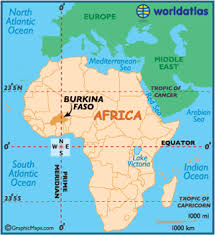
Things were looking hopeful for the West African country of Burkina Faso. Since gaining independence in 1960, the former French colony was ruled primarily by the military and experienced several coups. Last year, the 27-year rule of a former president ended after a mass uprising and protests, and a democratically elected president was inaugurated on December 29.

And then, on January 15, terrorists attacked a hotel and café, setting off explosions and targeting guests and employees. In all, 20 people were killed and dozens more wounded. The North African Branch of Al Qaeda, which claimed responsibility for the attack, is the same group that held 170 people hostage and killed 22 at a hotel in Bamako, Mali in November.

Along with the rest of the world, I mourn the senseless loss of those lives, but I also feel such profound sadness for the people of those desperately poor countries trying to build lives for themselves. The New York Times explains that while tourists and business people who escaped last week’s carnage can hurry away on the first available plane, the workers who are lucky enough to hold such jobs can’t consider leaving no matter how frightening the situation becomes. “There aren’t many jobs here,” one employee observed.

Formerly known as Upper Volta, Burkina Faso’s name means Land of Incorruptible People. Since meeting some of those people during a 14-day visit to the country in 2004, I have been pulling for them from afar and rejoicing with each new development. And now this. So very sad.

African Tales, the compilation of stories from the six African countries I visited with my cousin, Dorothy Woodson, retired curator of African collections at Yale, is progressing distressingly slowly on this website. But with recent news events taking me back to those wonderful experiences, I was re-inspired to write more about the Land of Incorruptible People. The latest addition, about Burkina Faso, is “The Festival of the Masks.”

africa map

El Niño, Where Are You?

Californians have been eagerly, albeit somewhat nervously, awaiting El Niño, the weather pattern that brings winter rains to a state experiencing more than four years of drought. Here in Southern California, people early on got to work cleaning leaves and debris from their roof drains. Some purchased and installed rain barrels to capture and keep whatever drops eventually fall. They’ve stacked sandbags along low edges of their property. And they’ve turned off their outside sprinkler systems.

But where is the rain?

ladwp sprinklersEarlier this month there was a fairly decent downfall that got everyone’s hopes up. At our house, it told us that the leaking roof we had repaired a year ago had reopened in one spot and presented a new spot elsewhere. We called the roofer who offered to come before the next anticipated rainfall, and he did, coming hours before the storm was projected to get underway. We agreed to call him, one way or the other, to let him know whether his repairs had worked. But it didn’t rain that night. Nor since.

The forecast was revised to predict a heavy rain later in the week. Never happened. Now there’s no talk of rain anytime in the near future. There’s snow in the mountains that’s exciting skiers and water experts but nothing down here. It’s chilly, but the sun continues to shine.

Snow on the mountains

And the app on my smart phone continues to read:

“Chance of rain 0%.”


Is It Over Yet?

Masochist that I am, I watched every single candidates debate so far in this already interminably long presidential campaign. Both parties. Even those featuring the so-called undercard or which Rachel Maddow snarkily and delightfully refers to as “the kids’ table.” Strangely enough, those candidates, whose low poll numbers had relegated them to that position, seemed to make more sense than the ones on center stage. Not that I’m going to vote for any of the Republicans but still, it makes you wonder why many with the most experience and apparent decent judgment are the ones being forced to drop out. If they didn’t know it before, the rest of the world must think we’re crazy.

So the voting begins with the Iowa caucuses on Feb. 1. And then there will be more debates and more voting and finally 313 days from now, on Nov. 8, there will be a general election and the United States will have a new president. And poor, beleaguered Barack Obama will be able to take the gray hair we all gave him off to a well-earned retirement.

Happy New Year!