Oh, for a Jersey Tomato!

A traveler making his way on the New Jersey Turnpike from Newark’s Liberty International Airport into Manhattan could be excused for wondering why New Jersey is known as the Garden State. Was it someone’s idea of a cruel joke to attach such a bucolic-sounding word to a place of unending asphalt and steel girders? But were the traveler to venture farther into the state – and indeed, not very far – he’d understand the appellation. Even urban back yards can boast small plots of vegetables and flowers, more so of course in suburban areas, and in the southern reaches of the nation’s most densely populated state, actual farms manage to hold off encroaching housing developments.tomato soup
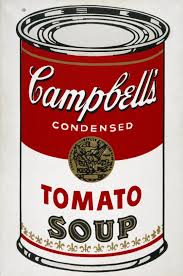
For most of the 20th century, South Jersey farmers grew the tomatoes that went into the products produced by the Campbell Soup Company at its plants in Camden. The company employed agronomists to develop perfect seeds and monitored the farmers’ efforts. At their height in mid-century, the plants employed 5,000 workers year-round and thousands more temporary workers at peak harvesting time. As Daniel Sidorick wrote in his book Condensed Capitalism: Campball Soup and the Pursuit of Cheap Production in the 20th Century, “Campbell stopped using South Jersey’s famous tomatoes in 1979 in favor of industrially produced tomato paste from California…(and) the company was free to move production to newer…rural plants. The last can rolled off the line in Camden in 1990, and the plant was imploded a year later.” The company’s world headquarters, however, remain in Camden.

So yes, New Jersey has been known for its tomatoes. During the more than 30 years we lived there, Ed kept expanding our backyard vegetable garden to the point that two freezers were required to hold the produce and foodstuffs like spaghetti sauce and zucchini bread that we made from it. And we ate out of those freezers all winter long. But before we filled the freezers, we ate giant, succulent tomatoes fresh off the vine, sometimes making a meal out of nothing but sliced tomatoes topped with a little olive oil and chopped basil. Thinking of it makes my mouth water.

Now we live in drought-plagued California where Ed has commandeered two pathetic patches of dirt in our vertical yard in which to grow a few tomato plants, some zucchini and peppers. The output, especially this year, is meager and the tomatoes, sad to say, mere imitations. I point out to Ed that there is a farmers market somewhere every day of the week here in Los Angeles, but he keeps trying to grow his own. The farmer gene runs deep I guess.

Our New York daughter and son-in-law are very good about bringing New York bagels – another loss – whenever they visit. But so far the closest we’ve come to Jersey tomatoes this summer is a picture of some they purchased at a farmers market in Washington Square. Gorgeous, aren’t they?


Jersey tomatoes

Supreme Irony

Supreme Court 1Be careful what you wish for.

With the U.S. Congress practically catatonic these days and few laws being passed, people have tended to push their interests to the Supreme Court for decision-making. In the flurry of decisions announced in the last weeks of the just-ended term, this thought kept entering my mind: The Supreme Court giveth and the Supreme Court taketh away. Whether you considered a particular ruling a “giveth” or a “taketh-away” depended on your ideological bent.

In general, commentators seemed to feel that more decisions leaned toward pleasing those with a liberal bent. And yet those people were unhappy with the rulings that pleased those with a conservative bent.

That’s life in a sharply polarized society, and all that’s left for those who may have been unhappy about the way things went is – as the old Brooklyn Dodgers used to say in the years when they were unable to win a World Series – “Wait till next year!” Or in the case of the Supreme Court, next term, which begins the first Monday in October.

Supreme Court 2

How About Those Women?

As someone who knows next to nothing about soccer, I nonetheless tuned in to the Women’s World Cup Finals last night. And read avidly about it again this morning. The Americans’ 5-2 win over Japan was dazzling, and it may have made me a fan. That and the fact that someone called soccer the next feminist fight.women's world cup 4

There was the matter of the artificial turf installed for the women’s games while the men’s teams always play on natural grass. Made of plastic and rubber, the fake stuff can reach temperatures of 120 degrees and cause burns and unnecessary injuries. A gender discrimination lawsuit filed before the games was withdrawn when it became apparent that FIFA and the Canadian Soccer Federation could not be moved on the subject. At the time, American striker Abby Wambach expressed hope “that the players’ willingness to contest the unequal playing fields – and the tremendous public support received during the effort – marks the start of even greater activism to ensure fair treatment when it comes to women’s sports.”

And then there’s money. Prize money being divided among the winning women’s team members is $2 million compared to $35 million for the men. Overall prize money reaches ever greater disparities. And don’t even think of the difference between what professional players of different genders make.

women's world cup 3But still, wasn’t it glorious? Four goals in the first 16 minutes? That’s some change from the soccer games I’ve seen that go on and on and wind up with a score of 0-0. And the players – on the men’s teams as well as the women’s – lithe and trim, gracefully flying across the field (yes, I know it’s called the pitch) and managing the ball with unbelievably deft footwork. So much more enjoyable to watch than American football with its bulked-up players padded head to toe to move a few feet on the field or head-butting one another into eventual brain damage.

No wonder that worldwide football, the sport we call soccer, is revered around the world. And isn’t it great that it’s becoming so popular here? Among young girls as well as boys. “I’m so happy for every little girl who dreams about this,” American coach Jill Ellis said in a televised interview after the game.

As Bill Plaschke wrote in today’s Los Angeles Times, “The women’s team, which has long dominated the world stage and now holds the record with three World Cup championships, is celebrated not only as a powerful sports franchise, but as an affirmation of America’s commitment to gender equity on the playing fields.”

Yeah!

All the News You Can Absorb

“Wow! What a week for the news.”

That was how I’d planned to start this post. Until I read Gail Collins’ column in Saturday’s New York Times. “Ed!” I wailed. “Gail Collins stole my lead!”

Collins wrote: “Wow, Supreme Court – what a week…” And after some comments on Republicans’ reactions, she added “The Roberts Supreme Court is on a roll. Gay marriage, national health care and a surprising vote of support for the Fair Housing Act. Great job, guys!”

president at eulogy 2My “Wow! What a week…” was intended to be followed by acknowledgement of the momentous Court rulings, followed by my admiration for the dignity and grace with which the families in Charleston, SC handled the horrific killing of their loved ones in the Emmanuel African Methodist Episcopal Church, and wind up with my delight for the masterful eulogy President Obama delivered at the funeral for that church’s pastor. And the fact that he broke into singing “Amazing Grace.” Rachel Maddow’s program on MSNBC turned the entire second half of the newscast to uninterrupted video of the president’s speech which commentators are now calling “one of his presidency’s most impassioned reflections on race.”rainbowhouse

If I’d left the newscast that night and made my way to my desktop computer to write what I’d planned, then Gail Collins would have had to steal from me. But instead, I convinced Ed to join me in watching a streaming of “The Butler,” a film I’d watched the night before, even though at two hours in length it might strain my husband’s Friday night endurance. “It’s about the times in which we’ve lived,” I urged him. The movie was inspired by the real-life story of Eugene Allen, a longtime butler in the White House who is played in the film by Oscar winning actor Forest Whitaker. We both watched it, me for the second time, transfixed.

And now today’s paper tells me that my church, the Episcopal Church, has elected an African-American man for the first time as its presiding bishop. Bishop Michael Curry of North Carolina succeeds the current presiding bishop, Katharine Jefferts Schori, who was the first woman to lead the 1.9 million member church, the U.S. body of the Anglican Communion with 80 million members worldwide. As such, Jefferts Schori was the first woman to lead an Anglican national church.

We have indeed lived in transforming times.

Chocaholics Rejoice!

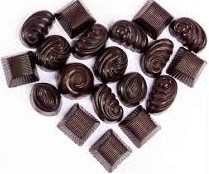
Woo-ee! Eating chocolate may keep your heart healthy.chocolate

At least that’s the indication from a study just published in the journal Heart and described in the Los Angeles Times by Melissa Healy. She writes: “Devoted consumers of chocolate – including those who eat up to two candy bars a day – are 11 percent less likely than those who eat little to no chocolate to have heart attacks and strokes, researchers have found.” And, she adds, the study found that “chocolate eaters are also 25 percent less likely to die of cardiovascular disease,..”

The findings come from a British study that tracked over an average of 12 years nearly 21,000 adults living around Norfolk, England. Those in the top one-fifth ate about half an American-sized candy bar a day, while those in the bottom 20th percentile averaged just 1.1 grams day, Healy writes, adding, “those in the highest chocolate-consuming group also had lower average body-mass indexes, systolic blood pressure and diabetes rates.”

The researchers combined their findings with those of nine other studies involving 159,809 people “to provide further context for their findings.” That analysis showed that “heavy chocolate consumers were 25 percent less likely to suffer a wide range of cardiovascular ills and 45 percent less likely to die of those ills.”

The LA Times quotes Dr. Farzaneg Aghdassi Sorond of Brigham and Women’s Hospital in Boston, who says that “observation studies” such as this most recent one call out for deeper analysis to learn whether it is chocolate itself that makes people healthier or something about the lifestyle of those who eat it. His research has shown “that when elderly people at high risk of stroke and dementia were given high quantities of cocoa to consume, the blood flow to their brains improved.” He notes that the British study did not “distinguish between grades of chocolate – and thus the cocoa content.”

chocolate2Chocolate’s benefits have long been suspected – and not just as wishful thinking by chocolate lovers like me. A friend of mine, someone much more disciplined than I, eats one piece of dark chocolate every day. I have a favorite cookie containing chunks of dark chocolate, one of which finishes off my lunch each day, but the only thing keeping me from devouring the whole package in one sitting is knowledge of one single cookie’s caloric count. When an entire box of chocolate (preferably dark chocolate with nuts and caramel) enters our home, it calls out my name repeatedly until the box is empty.

chocolate3Someone else I know swore off chocolate years ago because, she says, it makes her face break out. And even though everyone tells her that has been disproved, she will not relent. “All I know,” she says, “is when I eat chocolate my face breaks out and when I don’t eat chocolate, it doesn’t.” Hard to argue with that evidence.

But as for me, wouldn’t I love to participate in a chocolate-eating trial. Eh, on second thought, with my luck I’d be put in the control group and have to abstain while that top one-fifth pigged out.

Photos: clker.com, medicalnewstoday.com, livescience.com

More Drought Talk

Save The Drop Image EnglishOh, I know it’s boring if you live someplace where rain falls at reasonable intervals. But it’s all the talk around here. Just heard of another person who’s pulling up all of his lawn to install artificial turf. That’s plastic, isn’t it? Guess that guy in The Graduate was right: the future lies in plastic. And we all know where plastic comes from, don’t we? As someone once said to me, in explaining why some product or other cost so much, “It’s a petroleum product, you know.”

When Ed and I and our children were ricocheting back and forth from one coast to the other — 4.5 cross-country moves — we missed the last California drought. But friends told us about it at the time: how they would place a brick in the toilet tank to reduce the amount of water per flush (now they’d buy pricey low-flush toilets), keep a bucket in the shower to catch used soapy water to pour on plants (now they’d invest in expensive gray-water systems), and of course not running the water when they brushed their teeth (today, electric tooth-cleaning systems minimize water use). A cartoon recently implied that the characters were not bothered by drought restrictions because they were Europeans – “We don’t shower as much as Americans.”

Two facts that I learned and have carried through life, both counter-intuitive, are that showers use less water than baths and that dishwashers use less water than hand-washing dishes. I have had arguments with people on these two topics, but here’s the Los Angeles County Waterworks Districts confirming both assertions as they list water saving tips.

Our local Southern California Public Radio station had a piece about businesses that are suddenly profiting from this new interest in water conservation. After years of just getting by, a company that installs gray water systems can barely keep up with the telephone inquiries, and a nursery specializing in cactus and succulents sees its clientele surging from its former few aficionados to crowds of new devotees. And, of course, business is booming for landscape installation companies whose work seems to appear almost overnight. I drive by and ask myself, “When did they do that?”

Even without tackling major projects, the drought has the benefit of making us more aware of what a precious resource water is and how much more care we need to take about its use.

And for me, prone as I am to find things about which to feel guilty, all of the drought talk has left me with a whole range of new guilt outlets. Like: Is it true that it takes more than a gallon of water to grow just one almond? No, that statement has been disproved, although almond trees do require water year-round. Just like beef, which requires more than 106 gallons of water to produce one ounce of meat. Almonds with their shells, according to a Los Angeles Times report by Kyle Kim, require 48.6 gallons of water per ounce. The LA Times website also has a neat interactive graphic feature in which you can calculate the total “water footprint” of your meal, should you be so inclined.

Enough drought talk. Now I’ll concentrate on hoping for the return of El Niño and all the rains he might bring with him.

How Dry We Are

garden stepsHere in California we’re having a drought, you may have heard. Been going on for four years but people are just now getting serious about it. The driving force is the Governor’s 25 percent reduction order for urban water use. But there is also the generous rebate program being offered by water districts.

In Los Angeles, the turf-removal rebate is $3.75 a square foot, one of the highest in the region according to the Los Angeles Times. So homeowners are ripping up their lawns and replacing grass with desert-type landscaping: rocks and stones and “drought-friendly” plantings. And some are even replacing their lawns with plastic. You know the situation’s truly out of hand when you see a plant nursery – a company in the business of live plants — advertising to install Astroturf in your yard.

In all, Bettina Boxall writes in the LA Times, “the Southland is expected to tear out the equivalent of more than 2,100 football fields of grass – or more than twice the turf removal goal Brown set for the entire state in his emergency drought order.”

On its website, Southern California Public Radio reports that demand for rebates has outstripped the existing funding but additional money is being sought and interested homeowners should continue to apply. Molly Peterson writes, “In one recent week, Southern Californians applied for $48 million in rebates for lawns.” She notes that so-called ‘cash for grass’ programs “have been around in some form since at least a couple of droughts ago, but the Metropolitan Water District calls this level of interest in its current program unprecedented.”

gardenWith our unerring bad timing, Ed and I already have converted our yard so no rebates for us. We replaced what little grass existed on our pretty-much vertical back yard with rocks and gravel paths, stepping stones surrounded by smaller stones and pebbles, wood steps and decking. Our reason for doing so, back when it rained in California, was to minimize muddy dog-paw prints inside the house.

We also planted a lot of native vegetation, cactus and succulents, mainly because the plants were offered to us free by people wanting more glamorous displays in their own gardens. Coming here from the East Coast, all of it was intriguing to us, and the fact that you could take a cutting from a neighbor, stick it in the ground, and before long have a real bona fide plant of your own was knock-your-socks-off amazing. That and seeing what used to be considered houseplants growing wild along the roadside.

Another dumb thing we did early, in the spirit of good citizenship, was to voluntarily cut back to two times a week running the sprinkler system, rather than the three times allowed by the city’s water department. So now we have to worry: Will our 25 percent reduction have to come from our already-reduced consumption? Or will we be penalized for trying to do the right thing?

Stay tuned.

Can You Say Cheese?

cheeseI love it! Yet another formerly frowned-upon food stuff may be returned to favor by nutritionists.­­­­­­­­ TIME just ran an online piece by Mandy Oaklander titled “Here’s Your New Science-Backed Reason to Eat More Cheese.” And my reaction is: “Yay!” Not that I ever stopped eating the stuff but maybe now I won’t feel guilty doing it. TIME writes, “Americans have long been bewildered by the French paradox: that despite consuming a dream diet full of cheese, baguettes and red wine, people in France have generally low rates of coronary heart disease. By some estimates, the average French person eats 57 pounds of cheese each year – more than any other country – while the average American eats a measly 34.” Theories vary about the lucky French and their dietary habits (well, excepting snails; it takes a LOT of wine before I’ll eat them, delicious as the sauce may be) including the beneficial effects of resveratrol in red wine. Another reason for French people’s good fortune, according to TIME, points to a growing number of experts who say “that we were wrong – or at least partially wrong – to condemn saturated fat as a primary cause of heart disease. A small new study published in the Journal of Agricultural and Food Chemistry suggests yet another delicious possibility: cheese.” Admittedly, the study was small and funded in part by a Danish food company that produces dairy products and the Danish Dairy Research Foundation, but who cares? Cheese is good for you, it says. I’ll let you explore for yourself if you wish the rather graphic descriptions of what the bacteria from cheese and also milk do when they reach your gut. Suffice it to say, as TIME does, “The study adds a new dimension to our understanding how fermented milk products interact with the body.” I’m telling you, there’s no end to this good food news. First it was eggs, yokes and all, and then nuts that made it back into foodies’ good graces. As someone who can’t stay interested long enough to understand what the word “probiotics” actually means, I’m feeling somewhat vindicated in trying to follow a normal, sensible diet of good, mostly nutritious food and adhering to Oscar Wilde’s advice of “everything in moderation, including moderation.” But the day I hear that Pringles Sour Cream and Chives-flavored potato chips have been added to the Food & Drug Administration’s recommended basic food groups, I will know nirvana has indeed been achieved. Photo: en.wikipedia.org

Ah, Nuts!

nutsThe good food news continues. First we were told that eggs are our friends after all and now food writer Jane Brody recently wrote in The New York Times that unlike what she and I and lots of other people have always believed, nuts are not fattening. Hoo-ray! She wrote, “Sadly, for more than half of my life, I had avoided some of nature’s most perfect and healthful foods: nuts and peanuts. I had been mistakenly told as a teenager that nuts were fattening and constipating, effects I certainly wanted to avoid.” Fortunately for me, in my skinny teenage years, “fattening” was an attribute. So I moved into my not-skinny adult years with a love of nuts of all kinds, and now Brody’s research gives me permission to bulk up on them even more. She cites studies that indicated that “the more nuts people consumed the lower their death rates from all causes and especially from heart disease and stroke.” Her article acknowledged that allergies to nuts, and particularly to peanuts, seems to be more prevalent than ever, but even there, the news is encouraging. Two recent studies point the way to preventing children from developing such allergies. Women who consumed the most peanuts during their pregnancy seemed to have children less likely to develop peanut allergies, she reported. And another study suggests introducing peanuts into the diets of infants 4 to 11 months old – ground up and in nut butters of course – could reduce the children’s risk of being allergic at age 5. And yes, Brody wrote, “nuts are high in fat and contain more calories per gram (9) than protein or sugar (4 grams), even more than alcohol (7 grams),” but when consumed in reasonable quantities – the key phrase! – “are not fattening and can even help people lose weight and maintain the loss.” Whoo-ee!! One of my favorite lunches, a holdover from my childhood, is a cream cheese and walnut sandwich. (Cream cheese and olives is good too. Actually, pretty much anything with cream cheese, speaking of fattening.) I always wondered but never asked if my family began making the sandwiches with nuts during wartime meat-rationing times. Nuts are a source of protein and other nutrients and probably helped to stretch the food budget dollar. There is one bit of bad news in Brody’s article. Two exceptions to the claim that nuts added to an otherwise healthful diet can reduce the risk of heart disease: macadamia nuts and cashews, both too high in saturated fat to qualify. Cashews, huh? Those things I buy when guests are invited to dinner and then polish off myself after they’ve left. Bummer.

Photo: en.wikipedia.org

Let’s Hear It for the Egg

eggsIt’s almost Easter. Aren’t you glad that eggs have now been rehabilitated?

Also avocados, shrimp and other supposedly cholesterol-laden foods that nutritional experts have been warning us about for years. Cholesterol is no longer a “nutrient of concern,” according to an advisory panel. Chris Erskine, a funny writer I enjoy reading in the Los Angeles Times, wrote a tongue-in-cheek obituary a while back for the white-egg omelet, a gustatory abomination embraced by the health-obsessed.

In the same piece, Erskine also lamented the see-saw nature of our nutritional advice. ‘Decades of government warnings about fats and oils proved increasingly shaky,” he wrote. “After years of shunning butter, consumers were told that margarine was even worse, described by some as ‘chemical gunk.’ The findings on their morning coffee were even more confusing,” he continued. “One day coffee was good for you; the next day it was the worst thing since nuclear sludge.”

Similar uncertainty surrounds red wine and dark chocolate. Are these things good for you or not? Do you care? Or do you, like me, take most of these reports with a grain of salt? Oops, another bad thing.

The other day in Trader Joe’s, where we buy our house wine — the one that Ed and I drink when company’s not around – I thought I’d pick up the “20 slices of bacon” a recipe called for. Surrounded by all the earnest young shoppers filling their baskets with guaranteed healthful and non-chemically adulterated food products, I surveyed the bacon offerings. It was confusing and I walked back and forth several times reading the packages, all proclaiming “UNCURED! NO NITRATES OR NITRITES!” Okay, I thought, I guess I know nitrates and nitrites are not good, but isn’t meat supposed to be cured? Can bacon give you trichinosis? Maybe if I cook it a good long time it will be okay.

Life should be simpler. Food should be enjoyed, not obsessed over. Personally, I like to follow Oscar Wilde’s advice: “Everything in moderation, including moderation.”

Photo: commons.wikimedia